 listicle
Shipping Company Reviews: Top Picks for Freight
Table of Contents
- How We Evaluated These Shipping Companies
- Quick Comparison: Top Shipping Companies at a Glance
- 1. Freight-Calculator.com: Instant International Freight Shipping Rates
- Cons:
- 2. MSC: Global Ocean Freight Capacity
- 3. Maersk: Integrated Supply Chain Logistics
- 4. FedEx: Express and Ground Delivery Services
- 5. UPS: Domestic Ground and Air Shipping
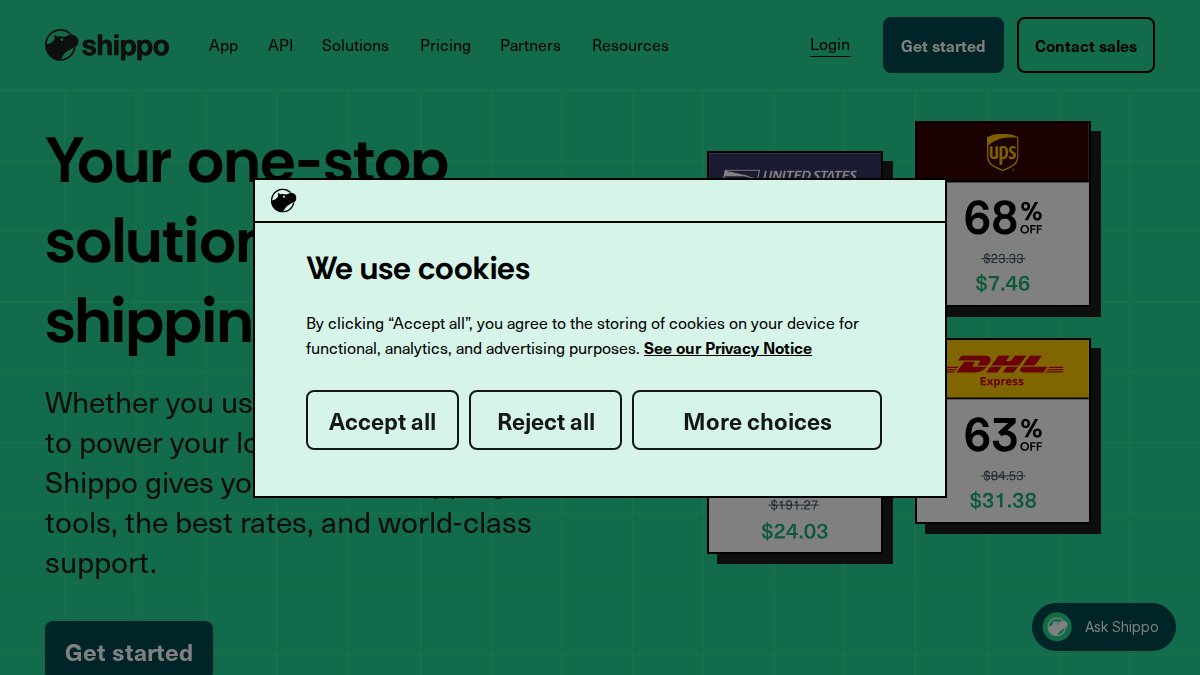
- 6. Shippo: Multi-Carrier Rate Comparison for E-Commerce
- How to Choose a Freight Forwarder or Shipping Company
- Frequently Asked Questions
Last Updated: October 1, 2026
How We Evaluated These Shipping Companies
Choosing a shipping company can make or break an e-commerce margin. This Freight-Calculator.com review scores providers on four weighted factors: quote speed, international reach, documentation support, and liability terms.

Our scoring criteria:
- Quote speed: Can you get a rate without a phone call or account?
- Coverage: Ocean, air, ground, and last-mile delivery in one place
- Transparency: Are surcharges and customs clearance fees visible upfront?
- Support: Does the provider handle documentation and bill of lading issues?
Quick Comparison: Top Shipping Companies at a Glance
Here is how the six shipping companies compare on the factors that matter most to freight shippers.
| Provider | Best For | Service Types | Quote Access | Coverage |
|---|---|---|---|---|
| Freight-Calculator.com | Instant international rates | Ocean, air, LCL | No registration | Global |
| MSC | Large ocean freight volume | Ocean, intermodal | Contact sales | Global ports |
| Maersk | Integrated supply chain | Ocean, warehousing | Contact sales | Global |
| FedEx | Express and ground parcels | Air, ground, express | Account-based | Domestic and international |
| UPS | High-volume domestic shipping | Ground, air, freight | Account-based | Domestic and international |
| Shippo | E-commerce rate comparison | Multi-carrier parcels | Free account | Domestic and international |
What actually drives your cost
Two shippers can book the same lane and pay wildly different rates. The variables that move the number most:
- Dimensional weight vs. actual weight. Carriers bill on whichever is greater, so a pallet of pillows and a pallet of engine parts can pay the same freight charge.
- Lane and season. Trans-Pacific rates spike ahead of peak retail season; domestic LTL tightens around the same window.
- Fuel surcharge. Published weekly and tied to diesel prices, not negotiable, but forecastable.
- Accessorials. Liftgate, residential delivery, inside delivery, and detention can add meaningful cost to a competitive-looking quote.
- Customs and duty. On international moves, duty and brokerage can exceed the freight charge on low-value, high-tariff goods.
Insurance and liability: the comparison most shippers skip
Every carrier limits its liability by default; the gap between that limit and your cargo's real value is the risk you carry.

- Ocean carriers typically cap liability per package or shipping unit under the Carriage of Goods by Sea Act, a container of high-value goods can far exceed that cap.
- Motor carriers in domestic LTL and FTL often limit liability by weight or per-pound released value, not invoice value.
- Parcel carriers publish declared-value limits and sell additional coverage above them.
Sustainability: a comparison column competitors leave blank
Buyers increasingly ask for carbon footprint data alongside a rate. Providers differ in what they can produce:
- Maersk has invested in carbon-neutral fuel initiatives and publishes emissions data for its ocean services.
- MSC reports fleet emissions and offers a biofuel option on some trade lanes.
- Parcel carriers typically publish per-shipment emissions estimates via API or dashboard.
- Freight marketplaces vary widely, some surface an emissions estimate at quote time, most do not.
API integration for e-commerce
If you ship parcels rather than pallets, software often decides the winner. A clean API lets you rate-shop, print labels, and push tracking updates automatically.
- Shippo offers a multi-carrier API that plugs into platforms like Shopify and WooCommerce.
- FedEx and UPS publish developer APIs for rating, shipping, and tracking, but access typically requires an account and sometimes a certification step.
- Freight forwarders generally do not offer self-serve APIs; integration is a sales conversation.
1. Freight-Calculator.com: Instant International Freight Shipping Rates
Freight-Calculator.com is the strongest pick for anyone who needs international freight shipping rates without waiting days for a callback. Powered by Global MAX Shipping AI, it returns ocean, air, and LCL pricing in under 30 seconds with no registration.
Pros and Cons
Pros:
- Rates in under 30 seconds, no account needed
- Direct forwarder, not a marketplace
- Data never sold or shared with competitors
- Ocean and air freight in one tool
Cons:
- Best suited to freight, not single small parcels
2. MSC: Global Ocean Freight Capacity
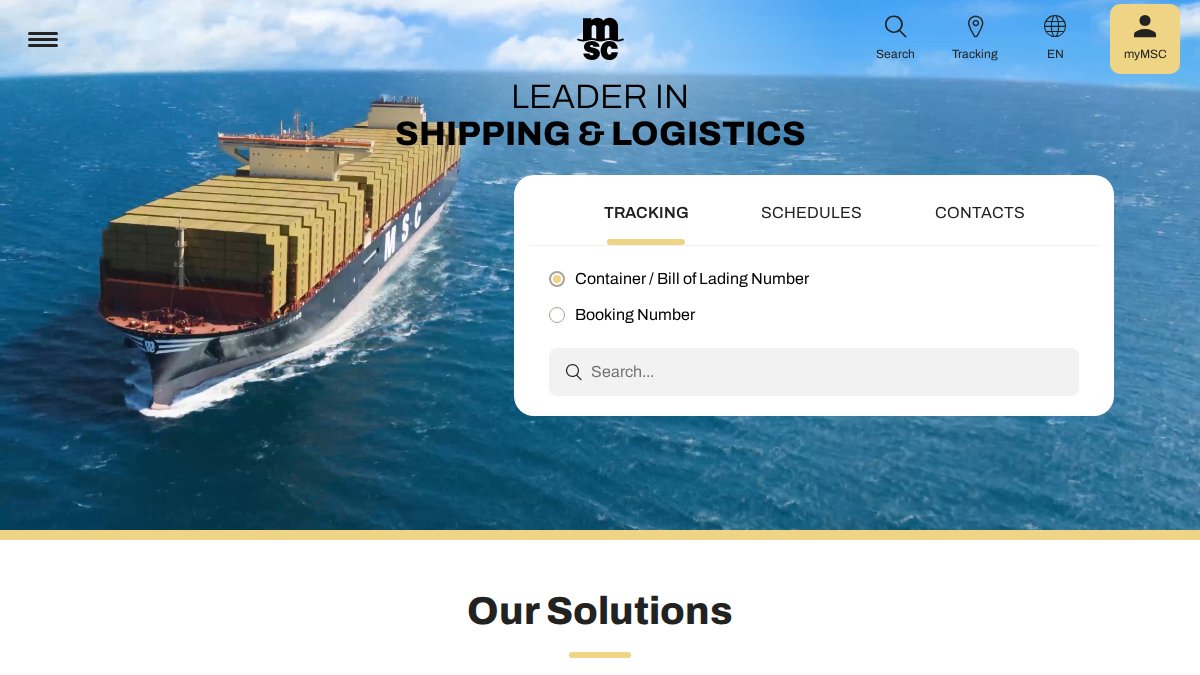
MSC runs one of the largest container fleets in the world, and that scale shows in its port coverage. For manufacturers moving full container loads on major trade lanes, the capacity is hard to match.
3. Maersk: Integrated Supply Chain Logistics
Maersk positions itself as an end-to-end logistics provider rather than a pure ocean carrier, with real-time shipment visibility and warehousing alongside port-to-port moves.
4. FedEx: Express and Ground Delivery Services
FedEx built its reputation on time-definite delivery and still leads on expedited shipping. Integrated customs brokerage simplifies international parcels, and its tracking app is among the industry's most reliable.
5. UPS: Domestic Ground and Air Shipping
UPS offers the broadest domestic ground network of any carrier here, plus air freight and integrated logistics. Tools like UPS My Choice give recipients control over delivery windows, reducing failed-delivery costs for e-commerce sellers.
6. Shippo: Multi-Carrier Rate Comparison for E-Commerce
Shippo is shipping software, not a carrier. It compares real-time rates across dozens of carriers, prints labels, and plugs into platforms like Shopify via API. For e-commerce teams shipping parcels rather than pallets, that flexibility is the point.
How to Choose a Freight Forwarder or Shipping Company
Match the provider to your cargo type first, then volume, then timeline. A parcel carrier and an ocean freight forwarder solve different problems, and picking the wrong category wastes money no matter how good the company is.
Step 1: Classify your cargo before you request a quote
Carriers price on density, not just weight: a shipment that fills a trailer but weighs little is "dimensional" freight, billed on volume. Before you call anyone, know three numbers, total weight, total cubic volume (cubic meters for ocean, cubic feet for domestic LTL), and handling units (pallets, crates, or cartons).
- Under 150 lbs per piece, parcel-sized: a parcel carrier or multi-carrier platform like Shippo is usually cheapest.
- 1-6 pallets, fits in a shared trailer: LTL is the standard choice.
- 6+ pallets or a full container: FTL or a full container load (FCL) ocean booking.
- Under 15 CBM internationally: LCL consolidation is typically more economical than booking a container.
Step 2: Confirm who is legally responsible for your cargo
This is where most shippers get burned: the entity that issues your bill of lading is contractually on the hook for the shipment.
- An NVOCC (non-vessel operating common carrier) consolidates cargo and issues its own bill of lading without owning ships, taking contractual responsibility for your freight.
- A freight forwarder arranges transport across carriers but may only act as an agent; if it does not issue its own bill of lading, its liability is narrower.
- A broker matches shippers to carriers and typically carries the least responsibility of the three.
Step 3: Build the documentation packet before booking
According to U.S. Customs and Border Protection guidance on importing, accurate shipping documentation prevents most customs clearance delays. A complete international packet generally includes:
- Commercial invoice, itemized value, quantity, and country of origin per line.
- Packing list, how goods are packed, with weights and dimensions per package.
- Bill of lading, the contract of carriage and title document.
- Certificate of origin, required for preferential duty treatment under trade agreements.
- Harmonized Tariff Schedule (HTS) codes, the classification determining your duty rate.
Step 4: Understand Incoterms before you sign
Incoterms define who pays for what and where risk transfers from seller to buyer. The two most common mistakes:
- Choosing EXW (Ex Works) as a seller, which puts nearly all cost and risk on the buyer and can make your product look more expensive than it is.
- Choosing DDP (Delivered Duty Paid) as a seller without pricing in duties, taxes, and customs brokerage, you can lose money on a sale that looked profitable.
Step 5: Pressure-test the quote
A rate is not a final cost. Ask for a landed-cost breakdown itemizing:
- Base freight charge
- Fuel surcharge
- Terminal handling and origin/destination charges
- Customs brokerage and duty estimates
- Insurance premium
- Accessorials (liftgate, residential delivery, inside delivery, detention, demurrage)
Step 6: Score the provider on support, not just price
Ask two questions before you book: Who answers the phone at 2 a.m. when a container is held at port? And can they produce a carbon footprint report if a buyer asks? Providers that cannot answer both are a liability on your supply chain, not just a line item.
Frequently Asked Questions
What are the top 5 shipping companies for international freight?
For international freight, the top options include Freight-Calculator.com for instant ocean and air quotes, MSC and Maersk for large-scale container shipping, FedEx for express air cargo, and Freightquote for LTL and truckload moves. Each serves different volume needs. Freight-Calculator.com stands out for registration-free rate access and direct NVOCC service, while MSC and Maersk handle enterprise-level ocean freight with extensive port coverage.
How do I determine the cheapest shipping company for my cargo?
Start by calculating your cargo volume in cubic meters and weight, then compare quotes across carriers. For LCL shipments under 15 CBM, a freight forwarder or NVOCC like Freight-Calculator.com often provides better rates than direct carriers. For full container loads, contacting MSC or Maersk directly may reduce costs. Always factor in accessorial charges, customs clearance, and last-mile delivery when comparing total landed cost.
What is the difference between a freight forwarder and a shipping company?
A shipping company owns and operates vessels or aircraft, while a freight forwarder arranges transportation on behalf of shippers. Freight forwarders like Freight-Calculator.com book space with carriers, handle documentation, and coordinate customs clearance. An NVOCC is a type of forwarder that issues its own bills of lading and consolidates LCL cargo. Choosing between them depends on whether you need direct carrier capacity or end-to-end coordination.
What should I look for when vetting a shipping company?
Check licensing (NVOCC or freight forwarder credentials), insurance coverage, and whether they are TSA-approved for air cargo. Look for transparent pricing with no hidden accessorial fees, real-time tracking capabilities, and experience with your specific trade lane. Request references from similar-sized shippers and verify their customs brokerage partnerships. Companies like Freight-Calculator.com provide instant quotes without registration, which signals pricing transparency.
How do shipping companies calculate rates for LCL cargo?
LCL rates are based on volume (CBM) or weight, whichever is greater, plus origin and destination charges. Carriers apply a minimum charge per shipment, typically equivalent to 1 CBM. Additional fees cover documentation, customs clearance, and terminal handling. Using a CBM calculator before requesting quotes helps you compare accurately. Freight-Calculator.com includes an integrated CBM calculator to estimate volume and get accurate LCL pricing instantly.
Freight pricing shouldn't require a week of email tag or a sales call just to see a number. Freight-Calculator.com gives you instant international rates across ocean, air, and LCL cargo, with full landed-cost visibility and a CBM calculator built in. As a licensed and bonded NVOCC and TSA-approved forwarder, it stands behind every quote from calculation through shipment coordination. Get started with Freight-Calculator.com and price your next shipment in under 30 seconds.