 ultimate-guide
TSA Approved Freight Forwarder Services: A 2026 Guide
Table of Contents
- What Is a TSA Approved Freight Forwarder?
- Understanding Indirect Air Carrier (IAC) Certification
- TSA Known Shipper Program Requirements
- Air Freight Security Screening Procedures Explained
- Key Benefits of Using TSA Approved Freight Forwarders
- How to Verify and Select a TSA Approved Freight Forwarder
- Compliance Standards and Documentation Requirements
- Conclusion
Last Updated: August 15, 2026
What Is a TSA Approved Freight Forwarder?
A TSA approved freight forwarder is a licensed logistics company authorized by the Transportation Security Administration to handle air cargo shipments with full compliance to federal security regulations. These forwarders operate under strict TSA oversight and maintain the infrastructure, training, and documentation required to screen cargo destined for commercial aircraft.
The distinction matters because not every freight forwarder can legally move cargo on passenger planes. The TSA created a tiered approval system specifically to prevent unauthorized goods from reaching aircraft while enabling legitimate commerce to move efficiently. A TSA approved freight forwarder bridges that gap, they're vetted partners who understand both the business side of logistics and the security mandate that governs modern air transport.
What separates these operators from standard freight companies is their investment in compliance infrastructure. They maintain certified screening facilities, employ trained security personnel, and follow chain-of-custody protocols that would seem excessive if you didn't understand the stakes. A single security breach doesn't just harm one shipment, it can trigger industry-wide restrictions that affect thousands of legitimate shippers.
At Freight-Calculator.com, we track the logistics landscape across air, ocean, and ground transport. As a licensed and bonded NVOCC and TSA-approved forwarder ourselves, we understand firsthand what this certification demands and why it matters for shippers selecting partners. The certification isn't just a credential on a website, it's proof that a company has undergone rigorous vetting and maintains ongoing compliance audits.
Understanding Indirect Air Carrier (IAC) Certification
An Indirect Air Carrier (IAC) is a freight forwarder or logistics company authorized to tender cargo to airlines without physically operating aircraft. Think of it as the middle layer between shippers and airlines, they consolidate cargo, arrange screening, and coordinate with carriers, but they don't own or fly the planes.
The IAC distinction is critical for understanding the TSA-approved freight forwarder landscape. Not all freight forwarders hold IAC status. Some operate as customs brokers, ground handlers, or logistics coordinators without the authority to directly book space on passenger aircraft. An IAC certification means the company has passed TSA security assessments and demonstrated the operational controls needed to manage high-risk cargo environments.
To become an IAC, a company must:
- Establish a security program that meets TSA standards for personnel, facilities, and procedures
- Implement chain-of-custody protocols that track every shipment from receipt through handoff to the airline
- Conduct background checks on all employees with access to cargo
- Maintain audit trails and documentation for regulatory review
- Train staff on hazardous materials, security procedures, and incident response
The application process typically takes several months and involves site inspections, documentation review, and operational testing. Once approved, IACs face ongoing compliance audits, the TSA doesn't issue a certificate and walk away. They conduct surprise inspections, review security procedures, and can revoke authorization if standards slip.

Why does this matter for shippers? An IAC can guarantee that your cargo meets airline security requirements before it reaches the carrier. They've already screened it, documented its contents, and verified its compliance. This eliminates delays at the airport and reduces the risk that your shipment gets held up by carrier security teams.
TSA Known Shipper Program Requirements
The TSA Known Shipper program is a voluntary initiative that simplifies security screening for shippers who meet specific criteria. If your company qualifies as a Known Shipper, your cargo can move through expedited screening processes, reducing handling time and airport delays.
To qualify for Known Shipper status, your company must:
- Have a valid business address and phone number that TSA can verify
- Have shipped cargo on passenger aircraft within the past 12 months
- Maintain a clean record, no security violations, customs violations, or hazardous materials incidents
- Provide accurate shipping documentation and consistent shipper information
- Agree to TSA's Known Shipper terms, which require you to notify TSA of any security incidents
The application is free and can be submitted through an Indirect Air Carrier (IAC). Once approved, your company receives a Known Shipper ID number that you include on shipping documents. Airlines and screening facilities recognize this number and apply expedited procedures to your shipments.
Here's what expedited screening actually means: instead of opening every package and conducting detailed inspections, screeners can use risk-based protocols. They might perform X-ray scanning, explosive trace detection, or physical sampling, but they're not unpacking everything. For high-volume shippers, this translates to faster processing and fewer delays.
Air Freight Security Screening Procedures Explained
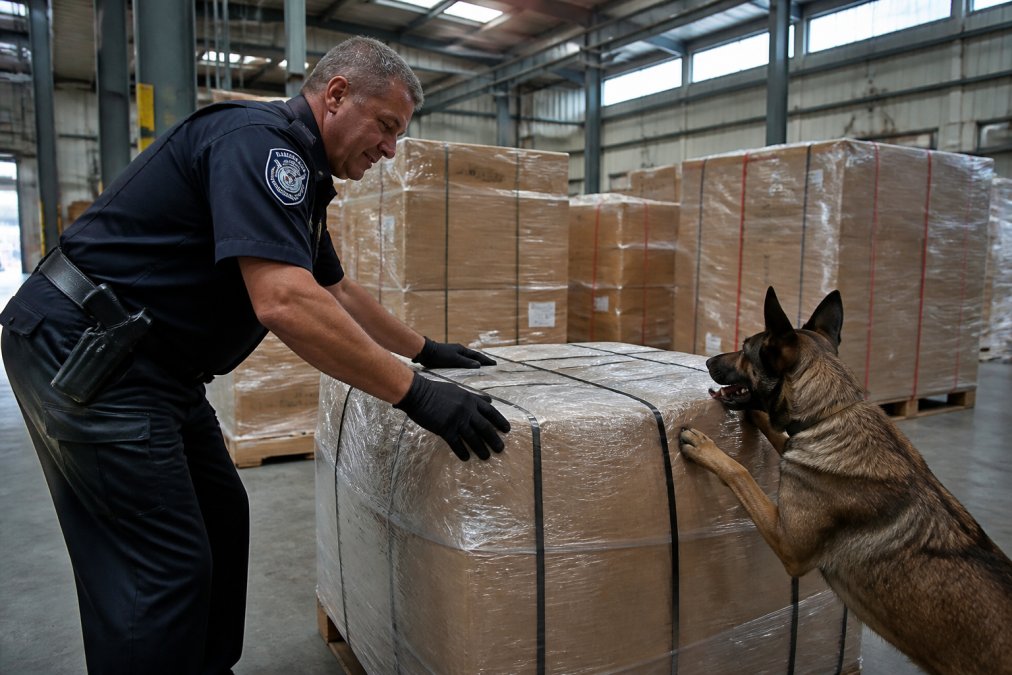
Air cargo destined for passenger aircraft must undergo screening that meets or exceeds TSA standards. The screening process varies depending on whether the cargo is moving through a Certified Cargo Screening Facility (CCSF) or being screened by the airline itself.
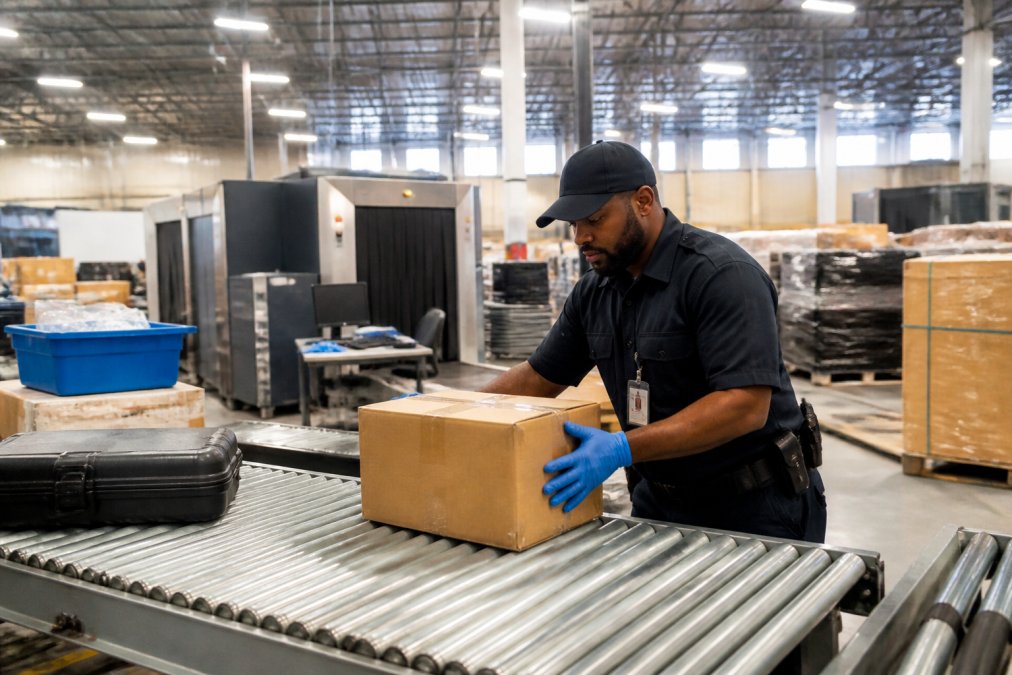
For cargo moving through a CCSF, the most common path for forwarder-handled shipments, the process looks like this:
- Acceptance and documentation review, The facility verifies the shipper's information, inspects the package exterior, and checks for obvious security concerns
- X-ray or imaging, The cargo passes through advanced scanning equipment that creates detailed images of contents
- Physical inspection, If imaging raises questions, staff open the package and physically inspect contents
- Hazardous materials verification, For regulated goods, staff confirm proper classification, packaging, and documentation
- Chain-of-custody documentation, The facility records who handled the cargo, when, and what was found
- Handoff to airline, The screened cargo moves to the airline with a completed screening certificate
The entire process typically takes 2-4 hours for standard shipments, though time-critical cargo can move faster if the shipper has Known Shipper status or uses expedited services.
What makes this different from ground shipping screening is the risk tolerance. Airlines carrying passengers have zero margin for security failures. A single incident can ground a carrier, trigger federal investigations, and damage public confidence in air travel. That's why screening is thorough, documented, and subject to TSA audit.
Many shippers underestimate how much screening delays their timeline. If you're booking air freight, budget for screening time as part of your transit estimate. A TSA approved freight forwarder can tell you exactly how long screening will take based on cargo type, shipper status, and facility capacity.
Key Benefits of Using TSA Approved Freight Forwarders
Working with a TSA approved freight forwarder eliminates several risks that unvetted logistics partners can't address. Here are the tangible advantages:
Guaranteed compliance. A TSA approved forwarder has already passed security vetting. You don't have to worry whether they'll meet airline requirements or trigger security holds. Their approval is your assurance that procedures are in place and audited.
Faster airport processing. Because they pre-screen cargo and maintain proper documentation, shipments move through airport terminals without delays. An airline doesn't need to re-screen cargo that's already been cleared by a certified facility. This saves hours of handling time.
Reduced shipping delays. Non-compliant cargo gets held at the airport for additional screening, which can delay shipments by 24-48 hours. A TSA approved forwarder prevents this by ensuring everything meets requirements before it leaves their facility.
Access to passenger aircraft. Some shippers need cargo on specific flights due to time sensitivity or customer commitments. Only IACs can book space on passenger aircraft, which offer more frequent departures and faster transit times than all-cargo flights.
Lower liability exposure. If something goes wrong with a shipment, damage, loss, security incident, working with a TSA approved forwarder gives you documented proof that proper procedures were followed. This protects you legally and makes insurance claims clearer.
Supply chain visibility. Professional forwarders maintain tracking systems that show exactly where your cargo is at every stage. You know when it arrives at their facility, when screening begins, when it's handed to the airline, and when it reaches its destination.
How to Verify and Select a TSA Approved Freight Forwarder
Not every company claiming TSA approval actually holds it. Verification requires checking official records and asking the right questions.
Step 1: Check the TSA's Certified Cargo Screening Facility database. The TSA maintains a public list of approved CCSFs at their website. Search by facility location or company name. If the forwarder claims CCSF status but doesn't appear in this database, they're either misrepresenting their credentials or their certification has lapsed.
Step 2: Verify Indirect Air Carrier (IAC) status. Ask the forwarder directly for their IAC certificate or authorization number. Legitimate IACs will provide this without hesitation. You can cross-reference with airline partners, carriers maintain their own lists of approved IACs they work with.
Step 3: Request proof of current compliance. A TSA approved freight forwarder should have documentation showing recent audit results or compliance certifications. Ask when they were last inspected and whether any violations were noted. Companies with nothing to hide will share this information.
Step 4: Evaluate their security procedures. During initial conversations, ask specific questions about their screening process, chain-of-custody procedures, and employee training. Their answers should be detailed and reference actual TSA requirements, not vague generalities.
Step 5: Check references with other shippers. Ask for references from companies that regularly use their services. Specifically ask about on-time performance, accuracy of quotes, and how they handle issues when they arise.
Step 6: Review their hazardous materials expertise. If you ship regulated goods, ask about their experience with specific material classes. TSA approval doesn't automatically mean they're equipped to handle all cargo types. Some forwarders specialize in certain categories and may refer other cargo to partners.
| Verification Step | What to Check | Red Flag |
|---|---|---|
| CCSF Database | Company appears in TSA's public list | Company not listed or facility address doesn't match |
| IAC Status | Forwarder provides certificate number | Hesitation or vague answers about certification |
| Compliance History | Recent audit results, no unresolved violations | Unwilling to discuss inspection history |
| Security Procedures | Detailed explanation of screening and documentation | Generic answers that don't reference TSA requirements |
| References | Positive feedback on reliability and accuracy | Reluctance to provide shipper references |
| Hazmat Capability | Specific experience with your cargo type | Vague statements about "handling most cargo" |
Compliance Standards and Documentation Requirements
Working with a TSA approved freight forwarder means your shipments will be subject to specific documentation and compliance standards. Understanding these requirements prevents delays and rejection at screening.
Shipper's Declaration for Dangerous Goods. If your cargo contains hazardous materials, you must complete this form with precise classification, proper packaging group, and emergency contact information. Incomplete or inaccurate declarations are the most common reason for screening delays. A TSA approved forwarder will review this before acceptance and reject non-compliant submissions.
Commercial Invoice and Packing List. These documents must accurately describe contents, quantities, weights, and values. Discrepancies between what's listed and what's actually in the package trigger manual inspections and delays. TSA approved forwarders verify these documents match the actual cargo before screening.
Airway Bill (AWB). This is the shipping contract and receipt for air cargo. It must include shipper and consignee information, a complete description of contents, weight, dimensions, and special handling instructions. Airlines use the AWB to verify compliance and assign the shipment to the correct flight.
Certificate of Origin. For international shipments, this document certifies where goods were manufactured. Some countries require this for customs clearance. TSA approved forwarders ensure this is completed correctly to prevent customs delays.
Insurance Documentation. While not always required, insurance certificates may be needed for high-value cargo. TSA approved forwarders can advise whether your shipment needs coverage and help arrange it.
Chain of Custody Records. These document every handoff, from shipper to forwarder, from forwarder to screening facility, from screening facility to airline. Each transfer is logged with date, time, and responsible party. This creates an auditable trail that satisfies both TSA and airline requirements.
The compliance burden sounds heavy, but TSA approved freight forwarders handle most of this internally. Your job is to provide accurate information about your cargo. The forwarder translates that into the documentation that regulators and carriers require.
Conclusion
Selecting a TSA approved freight forwarder isn't just about finding someone who can move your cargo, it's about choosing a partner who understands the regulatory landscape and has invested in the infrastructure to navigate it reliably. The certification proves they've met rigorous security standards and maintain ongoing compliance through audits and inspections.
Freight-Calculator.com operates as a licensed and bonded NVOCC and TSA-approved forwarder, offering instant international shipping rate calculations, transparent pricing without hidden fees, and full visibility into landed costs. Whether you're shipping air cargo, ocean freight, or LCL consolidations, working with a verified TSA approved forwarder eliminates compliance risk and keeps your supply chain predictable. Get started with Freight-Calculator.com and get transparent quotes in under 30 seconds, no registration required.
Frequently Asked Questions
How do I verify if a freight forwarder is TSA-approved?
Check the TSA's Certified Cargo Screening Facility (CCSF) directory on the TSA website, which lists all approved facilities and Indirect Air Carriers. Request documentation of the forwarder's IAC status or CCSF certification directly. Verify they maintain current training records and undergo regular security audits. Ask for references from other shippers and confirm their membership in CTPAT (Customs Trade Partnership Against Terrorism) or TAPA (Transported Asset Protection Association) for additional credibility.
What is the difference between a Known Shipper and an Indirect Air Carrier (IAC)?
A Known Shipper is a shipper whose identity and legitimacy have been verified by the TSA, allowing them to ship cargo without additional screening at the airport. An Indirect Air Carrier (IAC) is a freight forwarder or consolidator authorized by the TSA to accept cargo, screen it in-house, and deliver it directly to airlines. IACs handle the screening responsibility themselves, while Known Shippers benefit from reduced screening requirements when working with approved forwarders.
What are the main benefits of using a TSA approved freight forwarder?
TSA approved forwarders provide reduced airport screening delays, lower risk of cargo rejection, compliance with federal security mandates, and chain-of-custody accountability. They offer in-house screening through Certified Cargo Screening Facilities, eliminating bottlenecks at airport terminals. You gain access to verified security training, hazardous materials expertise, and documentation that meets regulatory standards. This translates to faster transit times, predictable costs, and protection against supply chain disruptions for your air cargo shipments.
Can I use any freight forwarder for air cargo, or do they need TSA approval?
Not all freight forwarders are TSA-approved. Only those holding Indirect Air Carrier (IAC) status or operating Certified Cargo Screening Facilities (CCSF) can legally screen and tender cargo to passenger aircraft. Using an unapproved forwarder for air freight exposes you to delays, cargo rejection, and regulatory violations. For domestic air shipments, TSA approval is mandatory. International air freight may have additional requirements depending on the destination country and the nature of the cargo being shipped.
This article was written using GrandRanker