 Ultimate guide
What Does a RoRo Shipment Cost and How Long Does It Take?
Last Updated: November 21, 2026
Quick Summary
A ro ro shipment is an ocean move in which wheeled cargo such as cars, trucks, buses or heavy equipment is driven onto and off a specialized vessel instead of being lifted into a container. Cost depends on ocean freight, port handling, documentation and inland transport, and transit time depends on the route and sailing schedule.
- Ocean freight is usually quoted per unit and driven by cubic measurement more than weight.
- Destination port fees and inland delivery can change the total, so ask for an itemized landed-cost view.
- Confirm the unit can start, steer and brake under its own power, or can be towed.
- Transit time is shaped by the sailing rotation, so confirm the schedule before committing to a date.
- Photograph and inspect the unit before signing the delivery receipt, since that record supports any claim.
Table of Contents
- Types of Vehicles and Cargo You Can Ship by RoRo
- RoRo Shipment Cost: What You Pay For and What Changes the Quote
- RoRo Shipment Time: Transit Expectations, Routes and Schedule Reliability
- RoRo Versus Container Shipping: Which Method Fits Your Cargo
- Tracking a RoRo Cargo Ship and Following Your Vehicle
- RoRo Shipping Safety, Cargo Security and Insurance
- Booking Your RoRo Shipment: Getting an Accurate Quote Before You Ship
- Frequently Asked Questions
If you need to move cars, trucks, buses or heavy equipment overseas, a ro ro shipment is one option to consider. Freight-Calculator.com helps shippers price these moves without registration. A RoRo (roll-on/roll-off) shipment is an ocean move in which wheeled cargo is driven on and driven off a specialized vessel rather than lifted into a container. Find the step-by-step vehicle shipping procedures to prepare your unit from start to finish. The global RoRo shipping market was estimated at USD 14.33 billion in 2026 and is projected to reach USD 24.41 billion by 2035 (Business Research Insights RoRo shipping market estimate).
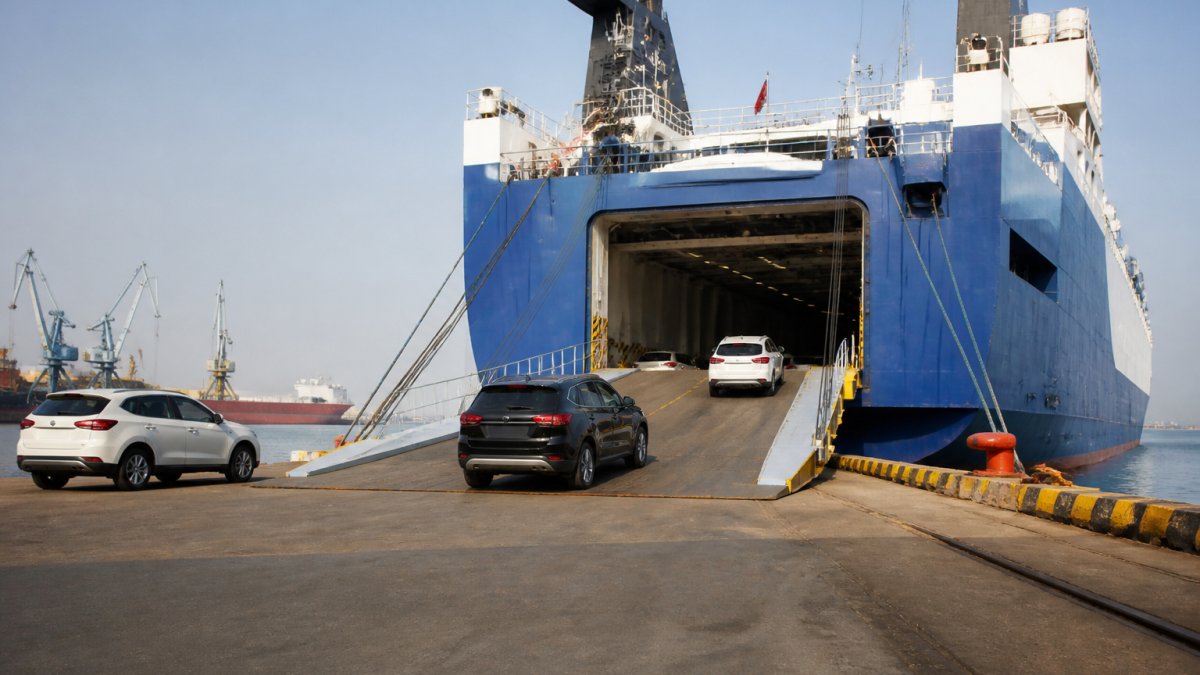
RoRo shipment refers to any cargo that can roll under its own power or be towed onto a vessel's deck, most commonly through a stern or side ramp, which is why a ro ro shipment suits wheeled units.
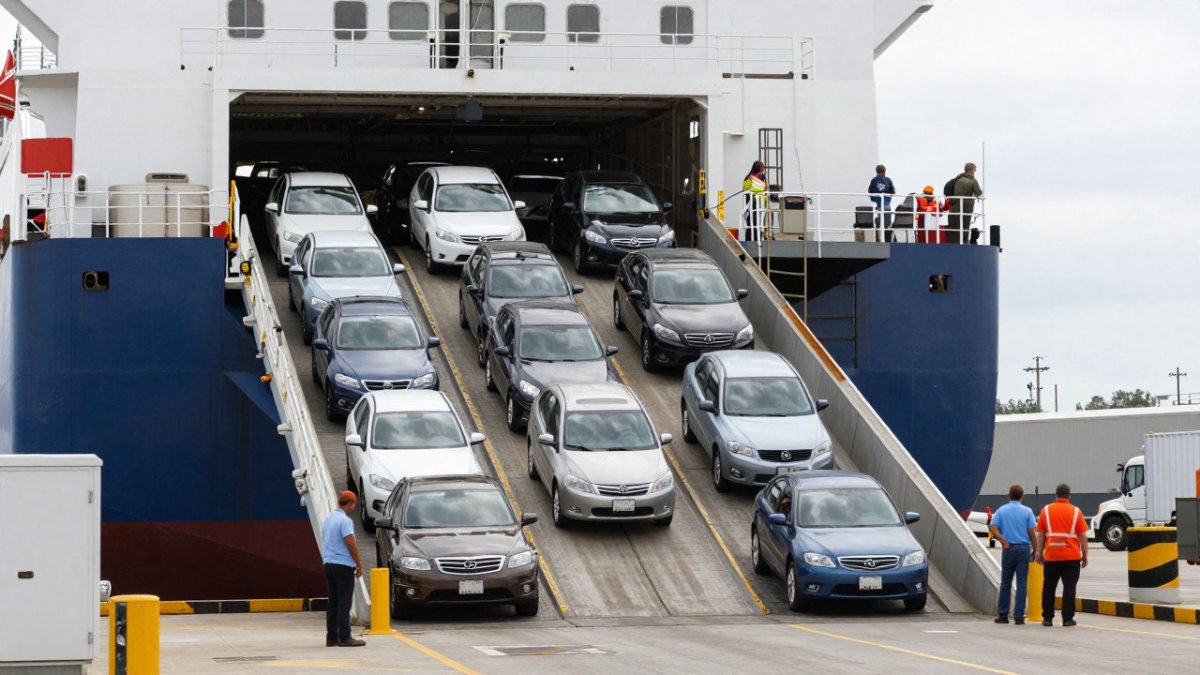
Loading follows a predictable sequence. Vehicles are staged at the port terminal, checked for paperwork and fuel level, then driven up the ramp and secured to the vessel's deck lashing points. Discharge reverses the process at the destination port. Because no crane is needed for the cargo itself, handling time is short and a single sailing can carry hundreds of units. Industry operator Höegh Autoliners describes RoRo as a method for moving vehicles, mining equipment, trucks, buses, boats and agricultural machinery (Höegh Autoliners RoRo service overview).
Types of Vehicles and Cargo You Can Ship by RoRo
RoRo suits any unit that drives or rolls. Passenger cars, motorcycles, trucks, buses, RVs, boats on trailers and wheeled industrial machinery are the most common loads. Equipment that is too heavy or awkward for a container often fits on a RoRo deck, which is why the method is popular for mining and agricultural machinery. You can export trucks, machinery and titled vehicles through RoRo and container services and calculate the costs.
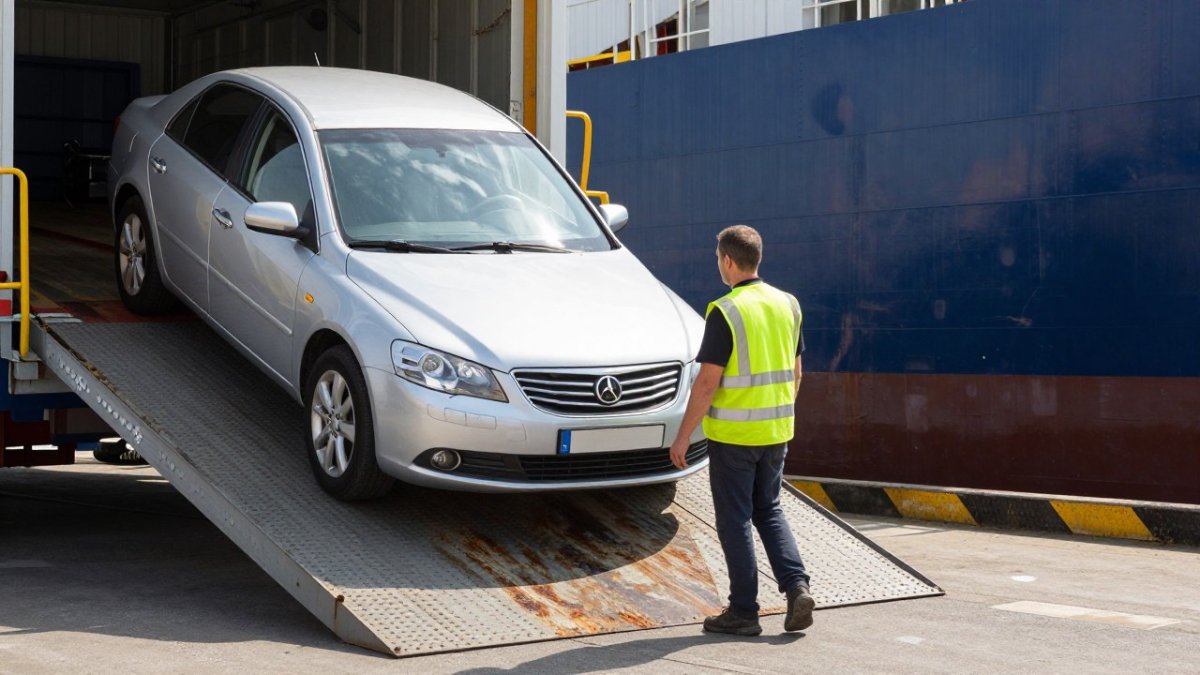
Before you book, confirm the unit can start, steer and brake under its own power, or can be towed with a suitable trailer. Remove loose accessories and personal items, and check the fuel level against the carrier's rules. Our vehicle shipping preparation guide walks through the preparation steps in more detail.
RoRo Shipment Cost: What You Pay For and What Changes the Quote
A RoRo shipment cost is not a single ocean rate. It is a stack of charges, and the quote you accept should itemize each one so you can see what is fixed, what is variable, and what is billed at destination. The total is commonly made up of several buckets: ocean freight, origin port handling, destination port handling, documentation, and inland transport at either end.
Ocean freight is the base charge for moving the unit on the vessel. It is usually quoted per unit rather than per container, and it is driven by the lane, the sailing date, and the unit's cubic measurement (length × width × height) more than by weight alone. A long-wheelbase truck or a piece of mining equipment that overhangs a standard deck footprint can be rated higher than a passenger car on the same sailing because it consumes more deck space. Oversize or non-standard units may also trigger a separate out-of-gauge or special-handling charge.
Origin and destination port handling are terminal charges for receiving, staging, loading, discharging, and releasing the unit. These are often quoted separately from ocean freight and can be billed at origin, at destination, or both. Documentation covers the bill of lading, the booking, and any manifest or customs paperwork the forwarder prepares. Inland transport covers trucking or rail from your door to the port of loading and from the port of discharge to the final destination; if you are delivering to the port yourself and collecting at the other end, those line items should drop out of the quote.
Several factors move the final figure more than shippers expect. Route and transshipment matter: a direct sailing usually prices differently from a routing that relays the unit through a hub port. Vessel schedule and sailing frequency matter because a tight departure window can force a premium or a longer wait for the next rotation. Cargo type matters because self-propelled vehicles, towed units, and heavy machinery are handled differently at the terminal. Destination charges matter because some ports assess terminal handling, wharfage, or release fees that are collected on arrival rather than prepaid.
Ask whether destination port fees and inland delivery are included in a quote, since charges billed at the far end can change the total. Ask for a landed-cost view that lists every line item and states which charges are prepaid and which are collect.
Freight-Calculator.com prices a RoRo move from your actual origin, destination, and cargo details, so the components appear together instead of arriving as separate invoices. Use the RoRo shipping calculator to see the breakdown for your lane before you commit to a sailing.
RoRo Shipment Time: Transit Expectations, Routes and Schedule Reliability
Transit time depends on the route, the number of port calls and the vessel's schedule. A RoRo vessel typically sails on a set rotation, so the departure window matters as much as the ocean crossing itself. Delays at the origin terminal, such as waiting for a sailing slot, often add more time than the voyage.
A recent review of RoRo operations notes that fleet and capacity planning are closely tied to shipping market conditions and involve a high degree of uncertainty (ScienceDirect review on RoRo decision making). Plan for schedule variation, and ask your forwarder to confirm the current sailing rotation before you commit to a delivery date.
RoRo Versus Container Shipping: Which Method Fits Your Cargo
RoRo is usually the better choice for wheeled, self-propelled cargo that can be driven aboard. Read about the differences between LCL and FCL shipping to see how rates and suitability compare for your freight. Container shipping suits goods that must be protected from weather, loose cargo, or items that cannot roll. The two methods differ in loading process, cargo protection and cost structure, so compare them on the specific unit you are moving.
| Factor | RoRo | Container |
|---|---|---|
| Best for | Vehicles, machinery, wheeled cargo | Boxed goods, palletized freight |
| Loading | Driven on and off | Lifted by crane |
| Cargo protection | Open deck, weather exposure | Enclosed box |
| Pros | Fast handling, no crane needed | Protected from weather and theft |
| Cons | Limited to rolling units | Extra cost for non-boxable cargo |
Tracking a RoRo Cargo Ship and Following Your Vehicle
Most shippers track a RoRo move by vessel name and voyage number, then follow the status of the individual unit at each port. Ask your forwarder for the booking reference, vessel and voyage details, and expected departure and arrival dates, so you can check progress against the sailing schedule.
RoRo Shipping Safety, Cargo Security and Insurance
RoRo cargo rides on an open deck and is driven on and off under its own power or by tow, so security depends on three things: how the unit is secured, what condition it was in when it was handed over, and what coverage applies if something goes wrong. The carrier lashes the unit to deck points and is responsible for the stow, but the shipper is responsible for presenting a unit that can be loaded safely and for documenting its condition before the ramp goes up.
Carrier liability on an ocean move is typically limited, so consider whether separate cargo coverage is appropriate for your unit and check the carrier's liability terms before booking.
If you buy coverage, confirm with your insurer what it covers, what it excludes, and whether it applies warehouse-to-warehouse or port-to-port.
Documentation is the other half of risk management. Photograph the unit from every side, record the odometer or hour meter, note existing damage, and keep the fuel level within the carrier's limit before delivery to the terminal. At destination, inspect the unit before you sign the delivery receipt, note any new damage on the receipt, and photograph it on the spot. Watch out: signing a clean receipt and discovering damage later makes a claim much harder to support, because the receipt is the record the carrier and insurer will rely on.
If damage occurs, notify the forwarder and the insurer promptly, keep the inspection report and photos, and preserve the delivery receipt and bill of lading. Claims windows are short, so report the issue as soon as the unit is released rather than after it reaches your yard. Confirm the carrier's liability terms and your insurance coverage before the vessel sails, not after.
Booking Your RoRo Shipment: Getting an Accurate Quote Before You Ship
Start with accurate dimensions, weight, origin and destination, and the sailing window you need. Freight-Calculator.com, powered by Global MAX Shipping AI, provides instant international shipping rates without registration. Use the RoRo rate calculator to price a roll-on-roll-off move for your vehicle or cargo. Use the RoRo shipping calculator to price your move, then review the landed cost components before you decide.
Frequently Asked Questions
What is a RoRo shipment?
A RoRo shipment, short for roll-on/roll-off, is cargo that is driven or rolled onto a vessel and driven or rolled off at the destination port. It is mainly used for wheeled cargo such as cars, trucks, buses, motorcycles, RVs, boats, and agricultural or mining machinery. Because the cargo drives on and off, no cranes are needed for loading, which often makes handling faster for suitable goods. Shippers typically prepare vehicles by checking fuel levels, removing loose items, and confirming they can be driven onto the ramp.
How long does a RoRo shipment take?
Transit time depends on the route, the vessel schedule, and port dwell time. Total time from booking to delivery includes pickup, port cutoff deadlines, customs clearance, and inland delivery. Schedules can shift with weather, port congestion, and vessel availability, so confirm the current sailing and cutoff dates with your forwarder before you book. Ask for both the sailing estimate and the expected arrival window.
How much does a RoRo shipment cost?
Pricing depends on quantity, dates, origin and destination ports, vehicle size and weight, and delivery terms. Costs can also rise with port charges, documentation, customs requirements, and insurance. Freight-Calculator.com does not publish fixed prices for RoRo shipments here, so for current figures and a breakdown of your specific quote, request an instant quote on the Freight-Calculator.com website. Compare quotes that list all charges, not just the base ocean rate.
Is RoRo shipping safe?
Vehicles should be secured, batteries and fuel handled according to carrier rules, and cargo documented with condition reports at pickup and delivery. Ask your carrier or forwarder about its cargo securing procedures and whether your policy covers damage in transit. Keep photos and records of your vehicle's condition, and review insurance options before the vessel sails.