 how-to
International Air Freight Rates Calculator: 2026 Guide
Table of Contents
- How an International Air Freight Rates Calculator Works
- The Air Freight Chargeable Weight Formula Explained
- Surcharges and Hidden Fees the Estimate Does Not Show
- Air Cargo vs Ocean Freight Cost Comparison
- How to Reduce International Air Freight Expenses
- Documents and Incoterms That Change Your Final Invoice
- Conclusion
- Frequently Asked Questions
Last Updated: September 16, 2026
How an International Air Freight Rates Calculator Works
An international air freight rates calculator is a digital tool that estimates shipping costs by combining your cargo's chargeable weight, origin and destination lane, service level, and current market rates into a single figure. According to IATA's Global Outlook for Air Transport, global air cargo traffic is projected to grow 2.6% in 2026, so pricing accuracy matters more than ever. At Freight-Calculator.com, we built our calculator to return instant estimates in under 30 seconds, with no registration required.
The tool does not guess. It pulls live lane data, applies standard weight formulas, and shows you where every dollar lands.
What the Calculator Needs From You
Five inputs drive the estimate:
- Origin and destination airports
- Cargo dimensions and actual weight
- Commodity type and freight class
- Service level (express, consolidated, or standard)
- Preferred transit time window
Get these wrong and your quote drifts. Get them right and you have a working budget number before you ever call a forwarder.
The Air Freight Chargeable Weight Formula Explained
The air freight chargeable weight formula compares actual weight against volumetric weight and bills you for whichever is greater. Volumetric weight is calculated by dividing cargo volume in cubic centimeters by 6,000 (or cubic inches by 166). This is the single most misunderstood number in air cargo pricing.
Here is how it works in practice:
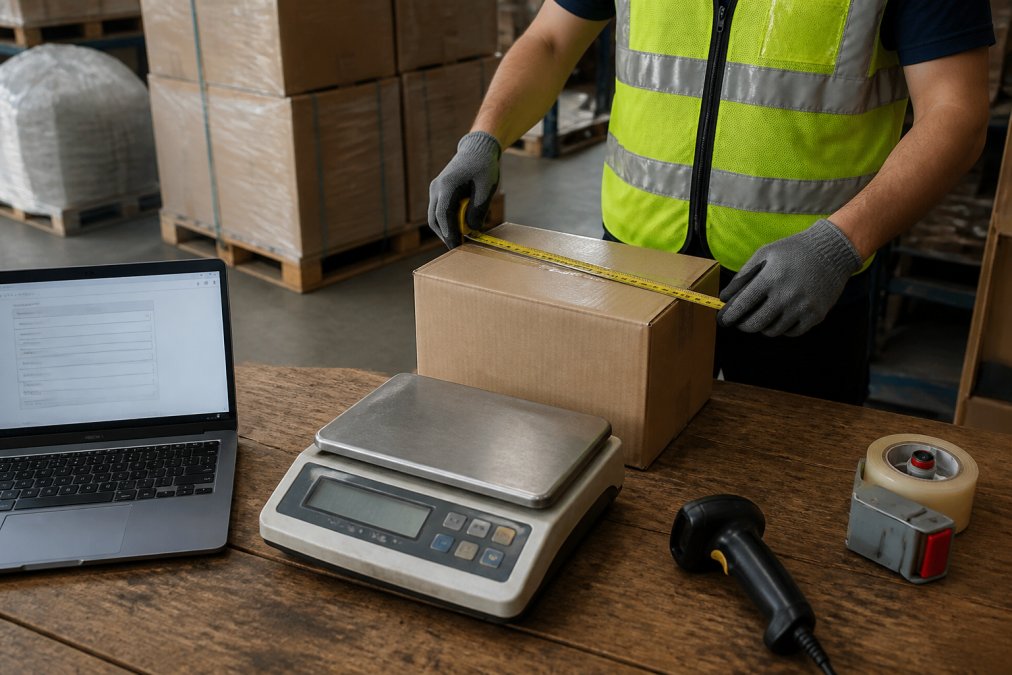
- Measure each carton: length × width × height in centimeters
- Multiply by the number of cartons to get total volume
- Divide total volume by 6,000 for volumetric kilograms
- Weigh the shipment for actual kilograms
- The higher figure becomes your chargeable weight
A shipment of pillows weighing 40 kg but occupying 0.5 CBM will bill at roughly 83 kg volumetric. That gap is where budgets break.
Volumetric Weight vs. Actual Weight
Volumetric weight is the space your cargo occupies expressed as a billable weight. Actual weight is what the scale reads. Carriers always charge the greater of the two, because a plane sells volume, not just mass.
Dense cargo (machinery parts, printed matter) usually bills at actual weight. Bulky, low-density cargo (apparel, packaging foam, furniture) almost always bills volumetric.
Surcharges and Hidden Fees the Estimate Does Not Show
Here is how the major add-ons actually work:
- Fuel surcharge. Expressed as a dollar-per-kilogram figure, not a flat fee. Carriers reset it weekly or monthly against published jet fuel indices, so a lane quoted at one fuel level can reprice before your cargo flies. On a 500 kg chargeable shipment, a $0.30/kg swing is $150.
- Security screening fee. Assessed per shipment or per piece for cargo that must be screened under federal air cargo security rules. It is not negotiable and applies even when the shipper is a known consignor.
- Terminal handling charges (THC). Billed separately at origin and destination by the ground handler, not the airline. A single shipment can carry two THC line items, and destination THC is often the larger of the two.
- Oversize and overweight penalties. Triggered by piece dimensions or weight thresholds, not total shipment weight. One 1,200 kg piece can be penalized even if the rest of the pallet is light.
- Dangerous goods handling. If your commodity classifies as hazardous, expect a per-shipment DG fee plus a higher base rate, and the paperwork burden is on you.
- Customs clearance and import duties. Country-specific, assessed at destination, and never included in a base rate. Duty is calculated on declared value plus freight and insurance in most jurisdictions, so a higher freight bill raises your duty base.
- Cargo insurance. Optional, but most forwarders will not release high-value cargo without it, and the premium is typically a small percentage of declared value.
- Storage and demurrage. Accrues daily once cargo sits past free time at a terminal, usually because documentation stalled clearance.
The BookAirFreight rate analysis found that comparing multiple quotes through digital tools can cut shipping costs by more than 20%, which usually offsets the surcharge gap entirely. The mechanism is simple: different forwarders buy lift at different contract rates and pass through surcharges differently, so the same lane can show a wide spread once fees are included.
Air Cargo vs Ocean Freight Cost Comparison
Air freight costs roughly 4-6 times more per kilogram than ocean freight, but it moves 5-10 times faster. The right choice depends on cargo value density and deadline pressure, not on rate alone.
| Factor | Air Freight | Ocean Freight |
|---|---|---|
| Typical rate | $2.50-$8.00 per kg | Lower per kg, higher minimums |
| Transit time | 2-8 days | 20-45 days |
| Best for | High-value, time-critical cargo | Bulk, non-urgent shipments |
| Chargeable basis | Volumetric vs. actual weight | CBM or container |
| Surcharge exposure | High | Moderate |
How to Reduce International Air Freight Expenses
The fastest way to cut air freight spend is to reduce chargeable weight, not to negotiate harder on rate. A 10% cube reduction on a volumetric shipment saves 10% of the billable kilograms, which translates directly to the invoice. The math is unforgiving: at a $4.00/kg rate, shaving 50 volumetric kilograms off a shipment saves $200, more than most shippers win in a rate negotiation.
Packaging and Palletization Choices That Cut Chargeable Weight
Three changes consistently move the needle:
- Right-size cartons. Oversized boxes inflate volumetric weight with air you pay to fly. A carton that is 5 cm too tall on every side can add double-digit volumetric kilograms across a pallet.
- Palletize tightly. Loose cartons waste cube; a well-built pallet can cut chargeable weight 8-15%. The mechanism is that a tight pallet presents a smaller bounding box to the carrier's dimensioner, so the volumetric calculation uses the pallet's footprint rather than the sum of individual carton volumes.
- Consolidate freight. Combining multiple small shipments into one air waybill reduces per-shipment handling fees. Each separate AWB carries its own minimum charge, security fee, and terminal handling charge, so merging three small shipments into one can eliminate two sets of fixed fees entirely.
Service Level and Lane Choices That Change the Rate
Chargeable weight is only half the equation. The other half is what you pay per kilogram, and that number moves with service level and routing:
- Express vs. consolidated vs. standard. Express buys the next available flight and the highest per-kilogram rate. Consolidated service waits for a full container or pallet build and prices lower but adds days. Standard sits between the two. Matching service level to actual urgency, not habit, is often worth more than any packaging change.
- Direct vs. connecting routing. A direct lane prices higher but avoids transshipment handling fees and reduces the risk of damage or delay. A connecting lane can be cheaper per kilogram but adds a second terminal handling charge and a second security screening.
- Airport pair selection. Flying into a secondary airport near the final destination can cut destination THC and trucking cost, even when the per-kilogram rate is slightly higher. The landed cost is what matters, not the headline rate.
- Dimensional weight divisor. Some carriers and lanes apply a 5,000 divisor instead of 6,000 for certain commodities, which raises volumetric weight by 20%. Confirming the divisor before you pack is a five-minute check that can prevent a five-figure surprise.
Documents and Incoterms That Change Your Final Invoice
Two shipments with identical weight and lane can bill differently based on paperwork alone. Incoterms decide who pays which charges, and missing documents stall cargo at customs, where storage fees accrue daily.
The documents every international air shipment needs:
- Commercial invoice with accurate declared value
- Packing list matching carton count and weights
- Air waybill (AWB) issued by the carrier
- Export documentation and any required licenses
- Certificate of origin where applicable
- Hazardous materials declaration if cargo qualifies
Conclusion
Air freight pricing in 2026 rewards shippers who understand chargeable weight, surcharge exposure, and documentation. Guessing at any one of those three costs real money.
Frequently Asked Questions
How is chargeable weight determined for air cargo?
Carriers compare actual weight against volumetric weight and bill whichever is higher. Volumetric weight is length times width times height in centimeters divided by 6,000 for most international air cargo. A light but bulky carton can therefore cost more than a dense one of the same weight. Run both numbers through an air freight calculator before you request space so the quote you receive matches the invoice later.
Is it cheaper to ship by air or ocean freight?
Ocean freight usually costs less per kilogram on heavy or high-volume shipments, while air freight wins on speed and on smaller, urgent consignments. Pricing depends on quantity, dates, and delivery. Compare door-to-door totals, including customs clearance and delivery, not just the line-haul rate.
How can I get an instant air freight quote without registration?
Enter your origin, destination, cargo dimensions, weight, and commodity type into a freight calculator and it returns an estimate in seconds. Freight-Calculator.com provides registration-free pricing so you can compare routes and transit times before committing. Treat the result as a working estimate: calculator figures are not final invoices and can shift once the carrier assesses the actual shipment.
What factors influence international air freight costs the most?
Chargeable weight, shipping lane, commodity type, and service level drive most of the price. Fuel surcharges, terminal handling charges, security fees, and peak-season demand add to the base rate. Hazardous materials and oversized palletized cargo carry extra handling fees. Incoterms also decide who pays which charge, so confirm the terms before you compare quotes from two forwarders.