 ultimate-guide
20-Foot Container Dimensions: Complete Specs Guide
Table of Contents
- 20-Foot Container Dimensions at a Glance
- 20ft Container Internal Dimensions Explained
- Shipping Container Weight Capacity and Tare Weight
- 20ft vs 40ft Container Dimensions: Key Differences
- Freight Shipping Container Specifications and Standards
- Calculating Volume and Practical Loading Considerations
- Regulatory and Transport Compliance
- Frequently Asked Questions
Last Updated: September 19, 2026
20-Foot Container Dimensions at a Glance
Understanding the 20-foot container dimensions and specifications is essential for anyone involved in logistics, e-commerce, or international shipping. Whether you're planning a shipment or calculating cargo capacity, knowing the exact measurements determines whether your goods fit and how much you'll pay to move them. A standard 20-foot container, also called a twenty-foot equivalent unit or TEU, has become the global baseline for containerized cargo. Freight-Calculator.com helps shippers and logistics professionals calculate accurate landed costs by understanding these critical specifications from the start.
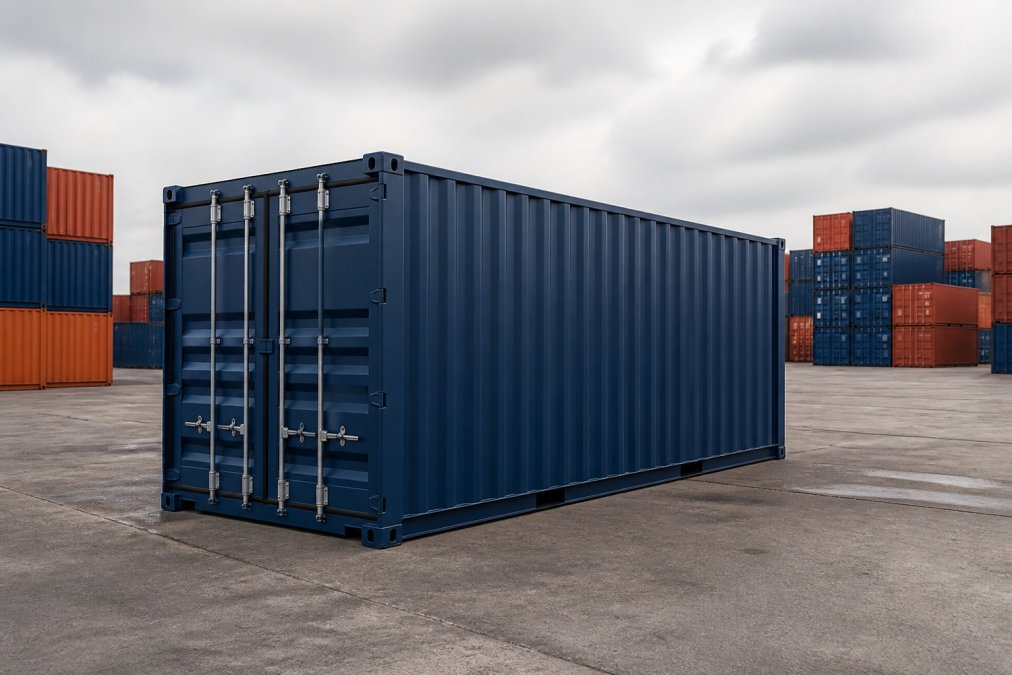
The standard 20-foot container has internal dimensions of approximately 19 feet 4 inches in length, 7 feet 8 inches in width, and 7 feet 10 inches in height, according to Hapag-Lloyd's standard container specifications. These measurements translate to roughly 1,172 cubic feet of usable cargo space. The external dimensions are larger due to the corrugated steel walls and corner castings that provide structural integrity during stacking and transport. Understanding both internal and external dimensions prevents costly loading mistakes and ensures compliance with transport regulations.
| Dimension | Measurement (Feet) | Measurement (Meters) |
|---|---|---|
| Internal Length | 19'4" | 5.90 |
| Internal Width | 7'8" | 2.35 |
| Internal Height | 7'10" | 2.39 |
| Door Opening Width | 7'8" | 2.35 |
| Door Opening Height | 7'10" | 2.39 |
20ft Container Internal Dimensions Explained
The interior of a 20-foot container is where your actual cargo lives. These measurements define what physically fits inside and how efficiently you can pack. Most shippers underestimate how much space they need because they visualize the container incorrectly. The internal dimensions create a rectangular box with a floor, four walls, and a ceiling, but the space isn't perfectly rectangular at the corners due to the structural design.
Length, Width, and Height Breakdown
The internal length of approximately 19 feet 4 inches provides the primary cargo space. This measurement runs from the inside of the back doors to the front wall. Width of 7 feet 8 inches spans the full interior side-to-side. Height of 7 feet 10 inches measures from the container floor to the interior ceiling. Together, these measurements yield a cubic capacity of approximately 1,172 cubic feet or 33.2 cubic meters. According to BWS.net container specifications, this standard volume is consistent across ISO-certified containers worldwide, ensuring predictable packing calculations.
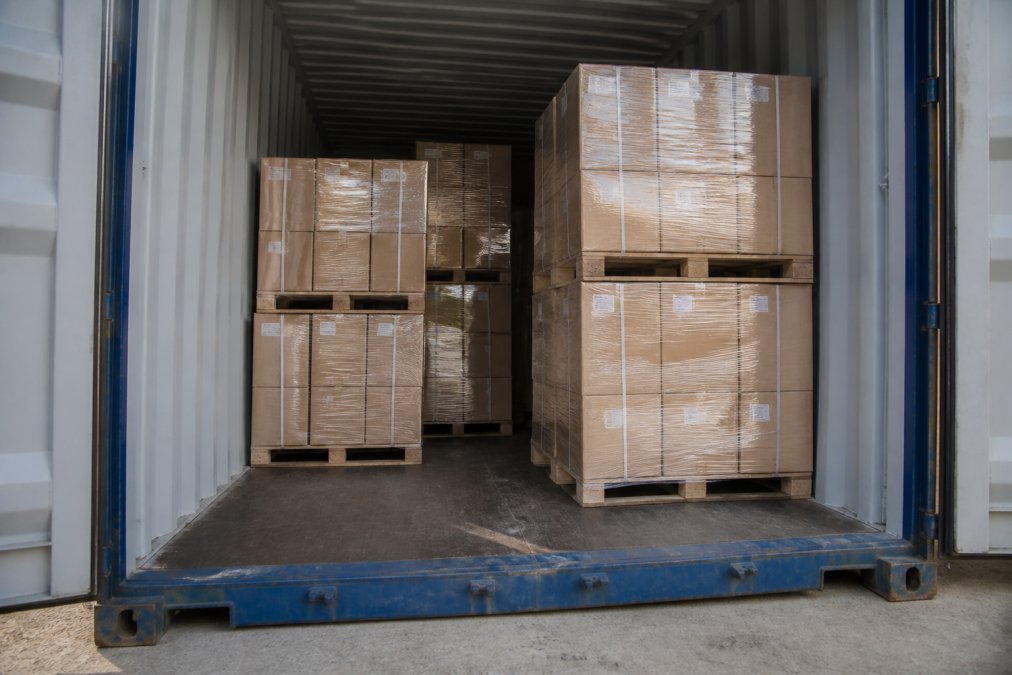
The practical floor area available for stacking pallets is roughly 150 square feet. Most standard pallets measure 48 inches by 40 inches. You can typically fit nine pallets across the length (three pallets deep, three across the width) when stacked two high, though actual configurations depend on your specific cargo weight and dimensions. The corrugated steel construction adds structural integrity but reduces usable space by several inches compared to the external shell.
Door Opening Measurements
The rear doors of a 20-foot container open to approximately 7 feet 8 inches wide and 7 feet 10 inches tall. These measurements match the internal width and height, meaning your cargo can theoretically fill the entire opening. However, the door frame itself reduces the usable opening slightly. The doors swing outward 270 degrees, requiring adequate clearance during loading and unloading operations.
This door configuration matters more than many shippers realize. Oversized items that fit within the 19'4" length but exceed 7'10" in height cannot enter the container. Similarly, items wider than 7'8" require diagonal loading or splitting across containers. The door opening dimensions are the real constraint for many shipments, not the overall internal space. Plan your loading sequence around door access first, then optimize the remaining space.
Shipping Container Weight Capacity and Tare Weight
Weight capacity determines whether your cargo fits legally and safely. Every 20-foot container has two critical weight figures: the maximum gross weight (total weight allowed) and the tare weight (the container's own weight). The difference between these is your payload capacity, the actual weight of cargo you can load.
Maximum Gross Weight and Payload Limits
The maximum gross weight for a standard 20-foot dry container is typically 67,200 pounds (30,480 kilograms). This is the absolute ceiling: container plus cargo cannot exceed this figure. Exceeding gross weight limits creates regulatory violations, poses safety risks during transport, and can result in fines or shipment detention at ports.
The tare weight of a standard 20-foot container is approximately 4,850 pounds (2,200 kilograms). This is the empty container's weight. Subtracting tare weight from maximum gross weight gives you the payload capacity: approximately 62,350 pounds (28,280 kilograms) of actual cargo. However, this assumes you're shipping dense goods. Many shippers hit the volume limit before reaching the weight limit.
Tare Weight vs. Payload Capacity
Understanding the relationship between tare weight and payload capacity prevents overloading. Tare weight varies slightly depending on the container's condition and age, but the standard figure remains consistent across most carriers. Older containers may weigh slightly more due to wear and corrosion, while newer containers are occasionally lighter.
Payload capacity is your practical constraint. If your cargo weighs less than 62,350 pounds but occupies the full 1,172 cubic feet, you've hit the volume limit first. If your cargo is dense and heavy, you may reach the weight limit before filling the container. Most e-commerce shipments hit the volume limit; heavy industrial goods hit the weight limit. Calculate both before booking.
20ft vs 40ft Container Dimensions: Key Differences
The choice between a 20-foot and 40-foot container determines your shipping efficiency and cost. A 40-foot container is essentially two 20-foot containers joined together, but the math doesn't work that way for pricing or practicality. Understanding the differences helps you choose the right equipment for your shipment.
Freight Shipping Container Specifications and Standards
All modern shipping containers comply with ISO (International Organization for Standardization) standards. These standards ensure that containers from different manufacturers stack safely, fit on ships, and move predictably through global logistics networks. Compliance with ISO standards is non-negotiable for international shipping.
ISO Standard Compliance and Certifications
ISO 668 defines the series 1 freight containers used in international trade. The 20-foot container falls under ISO 668 Type 1AA specifications. These standards specify external dimensions, internal dimensions, corner casting positions, door mechanisms, and structural requirements. Every container used in international commerce must meet these standards or it will be rejected at ports.
High Cube vs. Standard Containers
A high cube 20-foot container has the same length and width as a standard unit but stands approximately 9 feet 6 inches tall internally (versus 7 feet 10 inches). This extra height adds roughly 280 cubic feet of additional cargo space, about 24% more volume. The maximum gross weight remains 67,200 pounds, and the tare weight increases slightly to approximately 5,150 pounds.
Calculating Volume and Practical Loading Considerations
Volume calculation determines whether your cargo fits and how much space you're actually using. Many shippers calculate volume incorrectly, leading to surprises at the port or during customs clearance. The formula is simple: length × width × height = volume. But the real challenge is accounting for irregular shapes, packing efficiency, and practical constraints.
Cubic Capacity and Floor Area
The total cubic capacity of a 20-foot container is 1,172 cubic feet (33.2 cubic meters). However, you rarely use 100% of this space. Pallets, packaging, and structural constraints mean you typically achieve 85-95% use. If your cargo is packed in boxes, you can usually reach 90-95% use. If it's oddly shaped or fragile, use drops to 70-85%.
Real-World Loading Scenarios
Scenario 1: E-commerce shipment of packaged goods. You have 900 cubic feet of boxes averaging 15 pounds each. A single 20-foot container fits this easily with room to spare. Your weight is approximately 13,500 pounds, well under the 62,350-pound payload limit. This shipment hits the volume limit, not the weight limit.
Regulatory and Transport Compliance
Shipping containers must comply with regulations governing weight, stacking, and documentation. These regulations exist to protect port workers, truck drivers, and the integrity of the supply chain. Violating them results in fines, detention, or rejection of your shipment.
Frequently Asked Questions
What are the exact internal dimensions of a 20-foot shipping container?
A standard 20-foot shipping container has internal dimensions of approximately 19 feet 4 inches in length, 7 feet 8 inches in width, and 7 feet 10 inches in height. These standardized measurements follow ISO specifications, ensuring consistency across global logistics networks. The internal volume totals about 1,169 cubic feet, which is the usable space for your cargo after accounting for the container's structural walls.
How much weight can a standard 20-foot container hold?
A 20-foot container has a maximum gross weight (total weight including the container itself) of approximately 67,200 pounds. The tare weight (the empty container) is roughly 4,850 pounds, which means the payload capacity is approximately 62,350 pounds. However, actual payload depends on cargo density and stacking regulations.
What is the difference between a 20ft and 40ft container?
A 40-foot container is roughly double the length of a 20-foot unit (approximately 39 feet 6 inches internally versus 19 feet 4 inches), while maintaining the same width and height. This doubles the usable volume to about 2,385 cubic feet and increases payload capacity to roughly 58,425 pounds. The 20-foot container, measured in TEUs (twenty-foot equivalent units), is the industry standard baseline for capacity comparisons and often more economical for smaller shipments.
Are 20-foot container dimensions standardized globally?
Yes, 20-foot shipping container dimensions are standardized under ISO 668 specifications, ensuring consistency across all major ports and transport networks worldwide. This standardization guarantees that whether your container travels through North American, European, or Asian ports, the external dimensions, corner castings, and structural integrity remain identical. This uniformity is essential for intermodal transport and stacking efficiency in global logistics.