 ultimate-guide
What to Know About NVOCC Services in 2026
Table of Contents
- What NVOCC Services Are and Why They Matter
- NVOCC vs Freight Forwarder: Key Differences
- How NVOCC Services Work in the Supply Chain
- Benefits of Using an NVOCC for Your Shipments
- FMC Licensed NVOCC Requirements and Compliance
- Digital Transformation in NVOCC Services
- Cost-Benefit Analysis: When to Use NVOCC Services
- Liability, Insurance, and Risk Mitigation
Last Updated: August 30, 2026
What NVOCC Services Are and Why They Matter
Non-vessel operating common carriers (NVOCCs) are logistics intermediaries that consolidate shipments and negotiate vessel space with ocean carriers on behalf of shippers, without owning or operating their own vessels. They bridge small and mid-sized exporters lacking negotiating power with major ocean carriers. According to Cognitive Market Research and Consulting's 2026 NVOCC Aggregator Market Analysis, the global NVOCC aggregator market is projected to reach $10,388.95 million by the end of 2026, growing at a compound annual growth rate of 7.6% through 2033.
NVOCCs solve a critical problem: shippers moving less-than-container loads (LCL) can't negotiate competitive rates directly with major carriers. NVOCCs pool shipments, secure better pricing through volume, and pass savings to customers while handling complex documentation and compliance. North America managed more than 58 million TEUs (twenty-foot equivalent units) through NVOCCs in 2023, with the United States accounting for 85% of that volume, according to VAO's 2025 Industry Guide on Non-Vessel Operating Common Carriers.
NVOCC vs Freight Forwarder: Key Differences
NVOCC and freight forwarder are often used interchangeably, but they're legally and operationally distinct. An NVOCC is a specific regulatory classification under Federal Maritime Commission (FMC) rules. NVOCCs issue their own bills of lading (BOLs) as the shipper of record, take legal responsibility for cargo from pickup to final delivery, and must maintain FMC licensing and bonding. A freight forwarder typically arranges transportation on behalf of shippers but doesn't issue BOLs in their own name; they act as agents for the shipper or carrier.
When you ship with an NVOCC, that NVOCC is contractually liable for your cargo. With a freight forwarder, liability chains are more complex and may depend on which carrier or NVOCC they've hired on your behalf. NVOCCs typically offer consolidated LCL and FCL rates because they're buying vessel space in bulk. Freight forwarders may quote rates from multiple carriers or NVOCCs, offering comparison options but sometimes with less transparency about consolidation discounts.
Comparison Table: NVOCC vs Freight Forwarder
| Aspect | NVOCC | Freight Forwarder |
|---|---|---|
| Issues own BOL | Yes, as shipper of record | No, typically acts as agent |
| FMC licensing required | Yes, mandatory for U.S. operations | Not always required |
| Legal liability for cargo | Direct responsibility | Depends on contract with shipper/carrier |
| Consolidation services | Primary business model | Often offered, but not core |
| Rate transparency | Typically fixed consolidated rates | Variable, carrier-dependent |
| Best for | LCL/FCL consolidation, volume discounts | Complex logistics, multi-modal coordination |
If you're moving regular LCL shipments or smaller FCL volumes and want predictable, consolidated rates, an NVOCC is usually more efficient. If you need complex multi-modal logistics, customs brokerage, or flexibility across multiple carriers, a freight forwarder may be better positioned, though many modern freight forwarders also hold NVOCC licenses.
How NVOCC Services Work in the Supply Chain
An NVOCC's role is fundamentally about consolidation and rate optimization. A shipper submits a booking request with cargo details. The NVOCC aggregates shipments from multiple shippers destined for the same port or region. Once consolidated to full-container volumes, the NVOCC negotiates a rate with an ocean carrier for vessel space, then allocates that space among its shippers, issuing a house bill of lading (HBL) to each shipper and a master bill of lading (MBL) to the carrier.
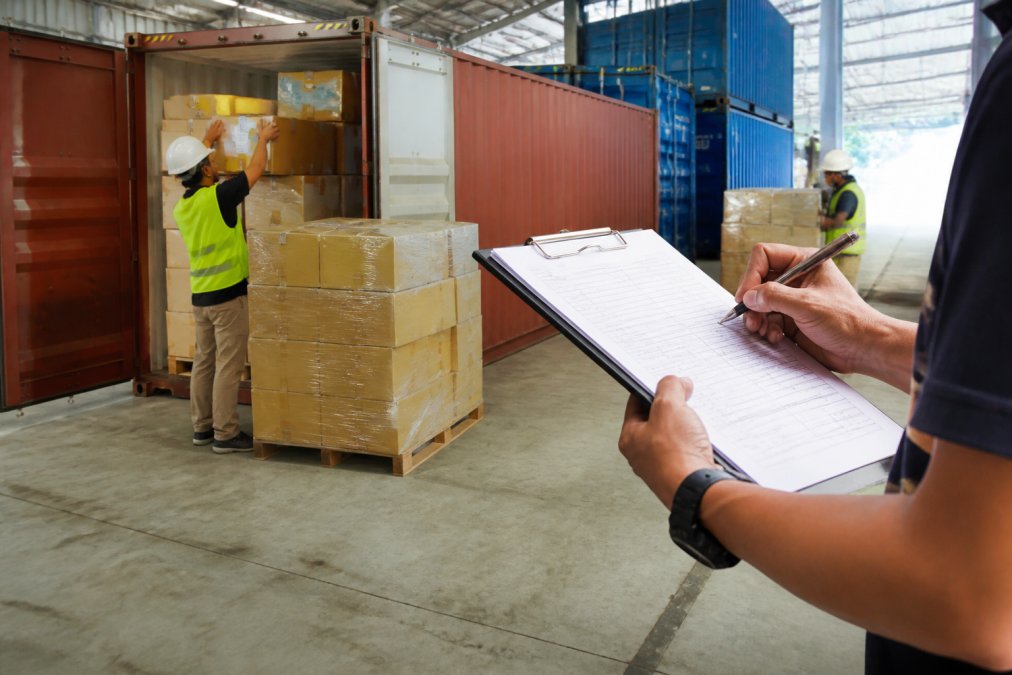
A single shipper with 8 CBM (cubic meters) of cargo can't negotiate directly with a carrier. An NVOCC collecting shipments from 15 shippers totaling 200 CBM can book a full 20-foot container at a negotiated rate, then distribute that space among the 15 shippers. Each shipper pays a fraction of the full container cost, and the NVOCC captures a margin on the spread between its carrier rate and shipper rate. According to the U.S. Federal Maritime Commission (FMC, 2023), 42% of NVOCC operators in the U.S. implemented online booking and real-time cargo tracking systems in 2023 to enhance operational efficiency.
Cargo Consolidation and Bill of Lading Issuance
Cargo consolidation is the operational heart of NVOCC services. The NVOCC receives shipments from multiple shippers, consolidates them into full containers, and manages the documentation chain. Each shipper receives a house bill of lading (HBL) showing the NVOCC as the shipper of record. The NVOCC then issues a master bill of lading (MBL) to the ocean carrier, showing the consolidated shipment.
This two-tier BOL structure creates a clear liability chain. The NVOCC is liable to its shippers via the HBL, and the ocean carrier is liable to the NVOCC via the MBL. This structure also protects shipper confidentiality; the carrier doesn't see individual shipper names, only the NVOCC's consolidated shipment. According to NVOCC Market Size, Share, Growth, and Industry Analysis 2026, NVOCC software in 2026 is purpose-built for ocean freight forwarding, handling consolidation, House Bill of Lading and Master Bill of Lading generation, FMC compliance, and bond tracking in one platform.
Carrier Contracts and Rate Negotiation
NVOCCs negotiate carrier contracts to secure vessel space and rates. These contracts specify sailing schedules, port pairs, equipment types, and service levels. The NVOCC's negotiating power comes from volume commitments. A carrier is more willing to offer a discount if an NVOCC commits to moving 500 TEUs per month on a given lane. An NVOCC might negotiate a carrier rate of $1,200 per 20-foot container from Shanghai to Los Angeles, then offer shippers a consolidated LCL rate of $95 per CBM. According to the U.S. Department of Commerce (DOC, 2023), 36% of international parcel and container shipments handled by NVOCCs were e-commerce related in 2023, driving demand for flexible logistics solutions. E-commerce shipments are typically smaller and more price-sensitive, which pressures NVOCC margins and drives focus on operational efficiency and digital automation.
Benefits of Using an NVOCC for Your Shipments
The primary benefit of using an NVOCC is cost. Consolidated rates are often lower than spot rates for LCL shipments because you're sharing container space with other shippers. For a small e-commerce business shipping 5-10 CBM per week, this can translate to significant annual savings.
NVOCCs also provide predictability and professional handling of documentation and compliance. Instead of shopping for rates on each shipment, you can establish a standing relationship and receive consistent, published rates. Flexibility is another key benefit, NVOCCs consolidate on regular sailing schedules, so you don't need to accumulate a full container's worth of cargo to ship. For growing e-commerce businesses, this flexibility is critical.
For manufacturers and mid-market importers, NVOCC services provide access to premium carriers and routes that might otherwise be unavailable. A mid-sized importer moving 200 TEUs per year can't negotiate directly with Maersk or CMA CGM. Through an NVOCC, they get access to space on those carriers' schedules at negotiated rates.
FMC Licensed NVOCC Requirements and Compliance
Operating as an NVOCC in the United States requires Federal Maritime Commission licensing and compliance. This is a legal requirement for any entity issuing bills of lading as the shipper of record on ocean shipments.
Licensing, Bonding, and Legal Status
To operate as an NVOCC, you must obtain an FMC license (Form FMC-18). The application requires demonstrating financial responsibility through a surety bond. For U.S.-domiciled NVOCCs, the FMC requires a minimum bond of $75,000. For non-U.S. domiciled NVOCCs operating in U.S. trades, the bond requirement is $150,000. This bond protects shippers and carriers in case the NVOCC fails to perform its obligations. According to U.S. Federal Maritime Commission NVOCC Licensing Requirements, NVOCCs must file and maintain current tariffs (rate schedules) with the FMC, even if they offer negotiated rates to individual shippers. These tariffs must be filed electronically and kept publicly accessible. Freight-Calculator.com is licensed and bonded as an NVOCC and TSA-approved forwarder, operating under these same FMC requirements and maintaining the financial responsibility and compliance standards the FMC mandates.
Documentation and Regulatory Filings
NVOCCs must manage several regulatory filings. The most important is the tariff filing, a document listing the NVOCC's service offerings, rates, and terms of service. Even if an NVOCC negotiates rates individually with shippers, it must file a tariff showing what it offers publicly. This tariff must be updated within 30 days of any rate change and filed with the FMC's Automated Tariff Filing and Information System (ATFIS).
NVOCCs must also file service contracts with the FMC if they offer volume discounts or long-term rate agreements, and maintain detailed records of all bills of lading issued, consolidations made, and funds received from shippers. NVOCCs must provide shippers with clear, written terms of service that disclose liability limits, charges, and dispute resolution procedures. According to the U.S. Bureau of Transportation Statistics (BTS, 2023), 25% of NVOCC shipments experienced delays due to congestion at major ports in 2023. While port congestion is largely outside an NVOCC's control, NVOCCs must communicate these delays transparently.
Digital Transformation in NVOCC Services
Digital transformation is reshaping NVOCC operations. The shift from manual consolidation and paper documentation to automated systems, real-time tracking, and digital booking platforms is reducing costs, improving transparency, and enabling NVOCCs to scale without proportional overhead increases.

Real-time tracking is the most visible transformation. Shippers now expect to see where their cargo is at every stage. NVOCCs offering integrated tracking portals reduce shipper anxiety and support faster issue resolution. Automated documentation is another critical area. Modern NVOCC software automates bill of lading, customs forms, and port documentation generation, reducing errors and speeding processing. NVOCCs are increasingly integrating artificial intelligence and machine learning to offer predictive analytics for transit times, dynamic pricing models, and optimized route suggestions. An AI-powered NVOCC can forecast which sailing will be most efficient for a shipper's cargo, recommend consolidation windows, and adjust pricing based on demand patterns.
Cost-Benefit Analysis: When to Use NVOCC Services
Deciding whether to use NVOCC services depends on your shipment volume, frequency, and destination.
Use an NVOCC if:
- Your shipments are consistently under 15 CBM (consolidated LCL rates apply)
- You ship 2+ times per month to the same region
- You lack direct carrier relationships or negotiating power
- You need flexible shipping without committing to full containers
- You value transparent, published rates over spot market shopping
- You're in e-commerce or small-to-mid-market importing
Consider alternatives if:
- You're moving full containers regularly (FCL rates from carriers may be competitive)
- Your shipment volumes are extremely small and infrequent
- You need specialized services that standard NVOCCs don't offer
- Your destination is a secondary port with limited consolidation traffic
The cost-benefit calculation is straightforward. Compare the NVOCC consolidated rate to a direct carrier spot rate for your lane and volume. If the NVOCC rate is lower (typical for LCL) and you ship at least twice per month, the NVOCC model saves money and reduces operational complexity. Freight-Calculator.com provides instant, registration-free rate comparisons showing consolidated NVOCC rates and direct carrier rates side-by-side, removing guesswork from the cost-benefit analysis.
Liability, Insurance, and Risk Mitigation
When you ship with an NVOCC, the NVOCC is liable for your cargo from the time it takes possession through delivery to the consignee. This liability is typically limited to the cargo value or a maximum amount specified in the NVOCC's terms of service (often $500 per package). If your cargo is worth more, you need additional insurance.
NVOCC liability doesn't cover force majeure events (acts of God, war, strikes) or shipper-caused issues (inadequate packaging, misdeclared contents). It also doesn't cover delays or consequential damages. Most shippers purchase all-risk cargo insurance covering loss or damage from any cause except those excluded by the policy. Insurance premiums typically run 1-2% of cargo value.
Risk mitigation also involves choosing a reliable, well-capitalized NVOCC. An NVOCC's surety bond provides some protection, but it's not a guarantee. For this reason, many shippers prefer working with NVOCCs that are part of larger logistics groups or have strong financial backing. Documentation accuracy is another risk factor. Incorrect or incomplete bills of lading, missing harmonized tariff codes, or customs declaration errors can trigger holds or penalties. Working with an NVOCC using modern documentation software and having a compliance track record reduces this risk.
NVOCC services have become essential infrastructure for international shippers needing cost-effective, flexible consolidation without direct carrier relationship overhead. Understanding how NVOCCs work, what they're legally required to do, and how they compare to freight forwarders helps you make informed logistics decisions. As the market grows and digital tools mature, the NVOCC model continues to become more transparent and efficient. For e-commerce businesses, manufacturers, and mid-market importers shipping regular international volumes, NVOCC services typically deliver significant cost savings and operational simplification.
Freight-Calculator.com brings transparency to this process by offering instant, registration-free rate quotes showing consolidated NVOCC pricing alongside direct carrier alternatives. With 35 years of logistics expertise and FMC licensing as both an NVOCC and TSA-approved forwarder, the platform delivers accurate, real-time pricing and comprehensive shipment coordination.
=== FAQ ANSWERS (audit these too, same rules) ===
[1] Q: What services do NVOCCs provide? A: NVOCCs provide ocean freight services including cargo consolidation, bill of lading issuance, carrier contracts, and logistics coordination. They do not own vessels but arrange ocean transportation on behalf of shippers. NVOCCs handle both full container load (FCL) and less-than-container load (LCL) shipments, manage customs documentation, and offer real-time tracking. In 2023, 42% of NVOCC operators implemented online booking and real-time cargo tracking systems to enhance operational efficiency. NVOCCs act as intermediaries between shippers and ocean carriers, allowing businesses to access competitive rates and vessel space without direct carrier relationships.
[2] Q: Do NVOCCs need to be licensed by the FMC? A: Yes, NVOCCs operating in trades involving U.S. ports must obtain a Federal Maritime Commission (FMC) license. The FMC regulates ocean transportation intermediaries to protect shippers and carriers. Licensed NVOCCs must maintain a financial responsibility bond (typically $75,000 for U.S.-domiciled NVOCCs) and comply with tariff filing requirements. Unlicensed NVOCCs operating illegally in U.S. trades face substantial penalties and potential shutdown.
[3] Q: How do NVOCC services benefit small and medium-sized e-commerce businesses? A: NVOCC services enable SMEs to access competitive ocean freight rates and consolidation options that would otherwise be unavailable at their shipping volumes. SMEs typically lack the volume to negotiate directly with ocean carriers, but NVOCCs pool shipments to secure better rates. In 2023, 36% of international shipments handled by NVOCCs were e-commerce related, reflecting growing demand for flexible logistics solutions. NVOCCs provide simplified booking, transparent pricing, and faster transit times through optimized consolidation. For businesses shipping under 5 containers per month, NVOCC services can reduce costs and complexity compared to direct carrier bookings.
[4] Q: What is the difference between an NVOCC and a freight forwarder? A: NVOCCs issue their own bills of lading and assume direct liability for cargo, while freight forwarders typically issue house bills of lading on behalf of carriers and act as agents. NVOCCs negotiate vessel space and rates with ocean carriers, consolidate multiple shippers' cargo, and manage the entire ocean transportation process. Freight forwarders coordinate multiple modes of transport and handle documentation but do not typically issue their own ocean bills of lading. NVOCCs operate under FMC regulation and licensing requirements in U.S. trades; freight forwarders have different regulatory obligations. The choice depends on whether you need direct NVOCC consolidation services or broader multimodal logistics coordination.
Frequently Asked Questions
Q: What services do NVOCCs provide?
A: NVOCCs provide ocean freight services including cargo consolidation, bill of lading issuance, carrier contracts, and logistics coordination. They do not own vessels but arrange ocean transportation on behalf of shippers. NVOCCs handle both full container load (FCL) and less-than-container load (LCL) shipments, manage customs documentation, and offer real-time tracking. In 2023, 42% of NVOCC operators implemented online booking and real-time cargo tracking systems to enhance operational efficiency. NVOCCs act as intermediaries between shippers and ocean carriers, allowing businesses to access competitive rates and vessel space without direct carrier relationships.
Q: Do NVOCCs need to be licensed by the FMC?
A: Yes, NVOCCs operating in trades involving U.S. ports must obtain a Federal Maritime Commission (FMC) license. The FMC regulates ocean transportation intermediaries to protect shippers and carriers. Licensed NVOCCs must maintain a financial responsibility bond (typically $75,000 for U.S.-domiciled NVOCCs) and comply with tariff filing requirements. Unlicensed NVOCCs operating illegally in U.S. trades face substantial penalties and potential shutdown.
Q: How do NVOCC services benefit small and medium-sized e-commerce businesses?
A: NVOCC services enable SMEs to access competitive ocean freight rates and consolidation options that would otherwise be unavailable at their shipping volumes. SMEs typically lack the volume to negotiate directly with ocean carriers, but NVOCCs pool shipments to secure better rates. In 2023, 36% of international shipments handled by NVOCCs were e-commerce related, reflecting growing demand for flexible logistics solutions. NVOCCs provide simplified booking, transparent pricing, and faster transit times through optimized consolidation. For businesses shipping under 5 containers per month, NVOCC services can reduce costs and complexity compared to direct carrier bookings.
Q: What is the difference between an NVOCC and a freight forwarder?
A: NVOCCs issue their own bills of lading and assume direct liability for cargo, while freight forwarders typically issue house bills of lading on behalf of carriers and act as agents. NVOCCs negotiate vessel space and rates with ocean carriers, consolidate multiple shippers' cargo, and manage the entire ocean transportation process. Freight forwarders coordinate multiple modes of transport and handle documentation but do not typically issue their own ocean bills of lading. NVOCCs operate under FMC regulation and licensing requirements in U.S. trades; freight forwarders have different regulatory obligations. The choice depends on whether you need direct NVOCC consolidation services or broader multimodal logistics coordination.
This article was written using GrandRanker