 ultimate-guide
What Is a Freight Forwarder: 2026 Guide
Table of Contents
- What Is a Freight Forwarder?
- Key Responsibilities and Services Freight Forwarders Provide
- NVOCC vs Freight Forwarder: Understanding the Difference
- Freight Forwarder vs Carrier: What Sets Them Apart
- Understanding Freight Forwarding Shipping Rates
- How to Choose a Freight Forwarder for Your Business
- Why Freight Forwarders Matter in Modern Supply Chains
- Frequently Asked Questions
Last Updated: September 21, 2026
What Is a Freight Forwarder?
A freight forwarder is a licensed logistics intermediary that arranges the shipment of goods on behalf of shippers, handling everything from documentation to carrier selection to final delivery coordination. Unlike carriers who physically transport cargo, freight forwarders act as orchestrators, managing the complex logistics chain without necessarily owning trucks, ships, or planes.
The distinction matters. When you ship internationally, a freight forwarder becomes your strategic partner in navigating customs regulations, consolidating shipments, and securing the best rates across air, ocean, and ground transportation. According to Mordor Intelligence's 2026 freight forwarding market analysis, the global freight forwarding market was valued at USD 602.58 billion in 2026, with projected growth to USD 776.04 billion by 2031 at a 5.19% compound annual growth rate, a reflection of how central these services have become to global commerce.
Most businesses need instant visibility into rates, transparent pricing, and real-time tracking without registration friction, which is why Freight-Calculator.com built an instant freight quote platform powered by 35 years of logistics expertise.
Freight forwarders range from small regional operators to multinational corporations like Kuehne+Nagel and DHL. What they share is a fundamental responsibility: transforming your shipment into a fully documented, customs-cleared, tracked delivery at its destination.
Key Responsibilities and Services Freight Forwarders Provide
Freight forwarders negotiate rates with carriers, consolidate shipments, handle documentation, manage customs clearance, arrange warehousing, and provide tracking visibility, strategic coordination that directly impacts your landed costs and delivery timelines.
Documentation and Compliance
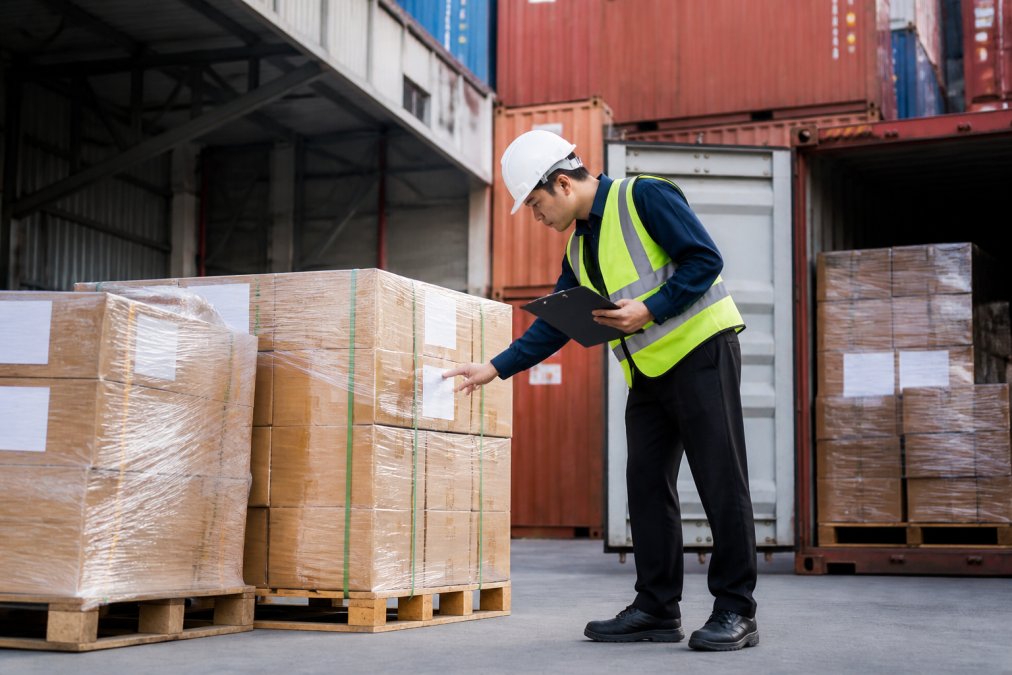
Every international shipment requires a bill of lading, commercial invoice, packing list, certificate of origin, and destination-specific compliance documents. A freight forwarder ensures every document is accurate, properly signed, and submitted to customs authorities before cargo arrives at port.
This isn't just paperwork. Customs brokers embedded within freight forwarding operations verify that your shipment complies with import/export regulations, tariff classifications, and country-specific restrictions. According to Descartes' 2026 freight industry study, 67% of freight forwarders and customs brokers view technology as critical to their operations, precisely because documentation errors can delay shipments by weeks or trigger expensive penalties.
Incoterms, standardized international commercial terms defining who pays for freight, insurance, and customs clearance, are the freight forwarder's working language. Your freight forwarder structures transactions under FOB, CIF, or DDP to match your business needs and cost tolerance.
Cargo Consolidation and Warehousing
A freight forwarder solves the problem of partial shipments through Less Than Container Load (LCL) consolidation, combining shipments from multiple customers into single containers. For a small e-commerce business, consolidation can cut freight costs compared to Full Container Load pricing.
Freight forwarders maintain distribution networks near major ports and airports for temporary storage and consolidation. This warehousing supports faster consolidation fill rates and shorter wait times for your shipments.
NVOCC vs Freight Forwarder: Understanding the Difference
An NVOCC (Non-Vessel Operating Common Carrier) is a freight forwarder licensed to issue its own bills of lading for ocean shipments. It consolidates cargo and books space with vessel-operating carriers, then acts as the carrier of record on your shipment.
When you ship with an NVOCC, your bill of lading comes directly from that NVOCC, not the underlying shipping line, giving it flexibility to offer consolidated rates and take responsibility for your cargo throughout ocean transit. Freight-Calculator.com operates as a licensed and bonded NVOCC, providing end-to-end accountability for your ocean shipments.
Not all freight forwarders are NVOCCs. Some operate as freight brokers, arranging shipments without issuing their own bills of lading. The NVOCC credential signals higher operational control and regulatory compliance; NVOCCs must maintain bonding, carry insurance, and meet strict Federal Maritime Commission (FMC) requirements.
Freight Forwarder vs Carrier: What Sets Them Apart
Carriers own and operate transportation assets, trucks, planes, or ships. A freight forwarder owns relationships, expertise, and systems.
When you book directly with a carrier, you negotiate rates for your specific volume. When you work with a freight forwarder, you benefit from their consolidated volume across hundreds of customers, often receiving better rates than you could negotiate alone.
Carriers focus on moving cargo from point A to point B. Freight forwarders focus on the entire logistics ecosystem: documentation, customs, warehousing, last-mile delivery, and compliance. A freight forwarder tells you the landed cost, handles regulatory requirements, and manages exceptions.
Working directly with carriers for international shipments creates operational friction: negotiating with multiple carriers, managing documentation, and coordinating customs clearance. A freight forwarder centralizes this complexity into a single relationship.
Understanding Freight Forwarding Shipping Rates
Freight rates are not fixed. They're dynamic, influenced by fuel costs, capacity utilization, seasonal demand, and macroeconomic conditions. According to SPS Commerce's 2026 freight market outlook, freight rates remain highly sensitive to fuel prices, labor availability, and overall economic demand, though extreme rate volatility has begun to ease from previous years.
Ocean freight rates are typically quoted per CBM (cubic meter) for LCL shipments or per container (20-foot or 40-foot) for FCL (Full Container Load) shipments. Air freight rates quote per kilogram. Ground freight quotes per mile or per shipment weight. These base rates don't include surcharges, fuel surcharges, port congestion fees, documentation fees, and handling charges layer on top of the base quote.
What Impacts Your Quote
Your freight quote depends on: origin and destination ports/airports, shipment weight and volume, cargo type, equipment type, and transit speed.
Origin and destination determine carrier competition and pricing. Shanghai to Long Beach moves on high-volume routes with lower rates; Shanghai to secondary ports face limited frequency and higher rates. Weight and volume determine LCL consolidation eligibility. Hazardous or temperature-controlled cargo requires specialized equipment. Expedited air freight costs 5-8 times more than ocean freight.
How Freight Forwarders Negotiate Rates
Freight forwarders negotiate volume commitments with carriers in exchange for tiered discounts. A forwarder moving 50 containers per month secures better per-container pricing than a shipper moving 2 containers per month alone. They aggregate demand across hundreds of customers and pass negotiated savings downstream.
Rate negotiations occur quarterly or semi-annually, tied to carrier capacity planning and fuel forecasts. Forwarders with strong carrier relationships secure preferential rates during tight capacity periods and lowest available rates during soft markets.
Surcharges accumulate hidden costs: bunker adjustment factors (BAF) swing 10-15% month-to-month with fuel prices; port congestion surcharges spike during peak seasons; currency adjustment factors apply to exchange rate shifts.
Consolidation Pricing and Cost Reduction
LCL consolidation gives small shippers container economics. Instead of FCL rates, you pay per CBM.
The Only Way to Understand Your Actual Freight Costs
Your actual cost depends on your specific shipment parameters, your forwarder's carrier relationships, current market conditions, and consolidation opportunities. Freight-Calculator.com provides instant ocean and air freight quotes in under 30 seconds, registration-free, with full transparency on every cost component, base freight, fuel surcharges, port fees, documentation charges, no hidden surcharges.
How to Choose a Freight Forwarder for Your Business
Selecting a freight forwarder directly impacts your supply chain reliability and costs. The right choice becomes a strategic advantage.
Verify Credentials and Licensing
A legitimate freight forwarder holds specific licenses and bonds. For ocean freight, verify NVOCC status through the Federal Maritime Commission (FMC) database. For air freight, confirm TSA approval as an Indirect Air Carrier. These credentials are legal requirements.
Evaluate Digital Capabilities and Real-Time Visibility
Real-time tracking: Can you see your shipment's location, status, and estimated arrival time 24/7 without calling your account manager? Modern forwarders integrate directly with carrier systems and port authorities to provide live updates. If a forwarder offers only email updates or requires you to log into multiple carrier portals separately, that's a red flag indicating fragmented systems.
Assess Transparency and Data Privacy
Transparency is non-negotiable. Your forwarder should show you exactly what you're paying for: base freight charges, fuel surcharges, documentation fees, customs clearance costs, and any other charges. Hidden fees or surprise surcharges indicate operational opacity that will create problems later.
Evaluate Specialization and Network Depth
Ask about their shipment volume on your specific origin-destination pair. High volume indicates established carrier relationships, frequent consolidations, and competitive pricing. Low volume suggests you'll be a small customer with less priority.
Why Freight Forwarders Matter in Modern Supply Chains
Companies that optimize logistics costs gain pricing power. Companies that achieve faster delivery times capture market share. Companies with reliable, transparent supply chain visibility make better business decisions.
Frequently Asked Questions
What does a freight forwarder do?
A freight forwarder arranges and coordinates the shipment of cargo on behalf of shippers. They handle documentation, negotiate rates with carriers, consolidate shipments to reduce costs, arrange warehousing and drayage, and manage customs clearance. Essentially, they act as intermediaries between you and the actual transportation providers (ocean carriers, airlines, trucking companies), ensuring your cargo reaches its destination efficiently and compliantly.
How do I know if a freight forwarder is licensed and legitimate?
In the United States, ocean freight forwarders must be licensed by the Federal Maritime Commission (FMC) as Non-Vessel Operating Common Carriers (NVOCCs) or freight forwarders. Air freight forwarders require TSA approval as Indirect Air Carriers. You can verify FMC licensing through the Commission's official database. Ask your forwarder for proof of bonding and licensing, and confirm they carry appropriate insurance. Established forwarders like those operating since 1991 with transparent credentials are more trustworthy than unlicensed alternatives.
What is the difference between a freight forwarder and a shipping carrier?
A carrier owns and operates the actual transportation equipment (ships, planes, trucks) and moves cargo between fixed routes. A freight forwarder doesn't own transportation assets; instead, they book space on carriers' services and handle logistics coordination. Forwarders consolidate smaller shipments, manage documentation, arrange insurance, and provide door-to-door service. Carriers focus on moving freight; forwarders focus on organizing the entire shipment process to save you time and money.
How do freight forwarders calculate shipping costs?
Shipping costs depend on cargo weight, volume (measured in cubic meters or CBM), origin, destination, equipment type (FCL or LCL), transit time, fuel surcharges, and current market rates. Forwarders factor in carrier fees, handling charges, documentation, insurance, and drayage. Instant quoting platforms can calculate these costs in seconds by accessing real-time rate data. Transparent forwarders show you every cost component so you understand exactly what you're paying for, with no hidden fees at delivery.
Choosing a freight forwarder means choosing a partner who understands your business, moves your shipments reliably, and keeps your costs transparent. Freight-Calculator.com delivers exactly that, instant international shipping quotes for ocean, air, and LCL cargo without registration, powered by 35 years of logistics expertise. Get started with a free quote today and see your landed costs clearly.