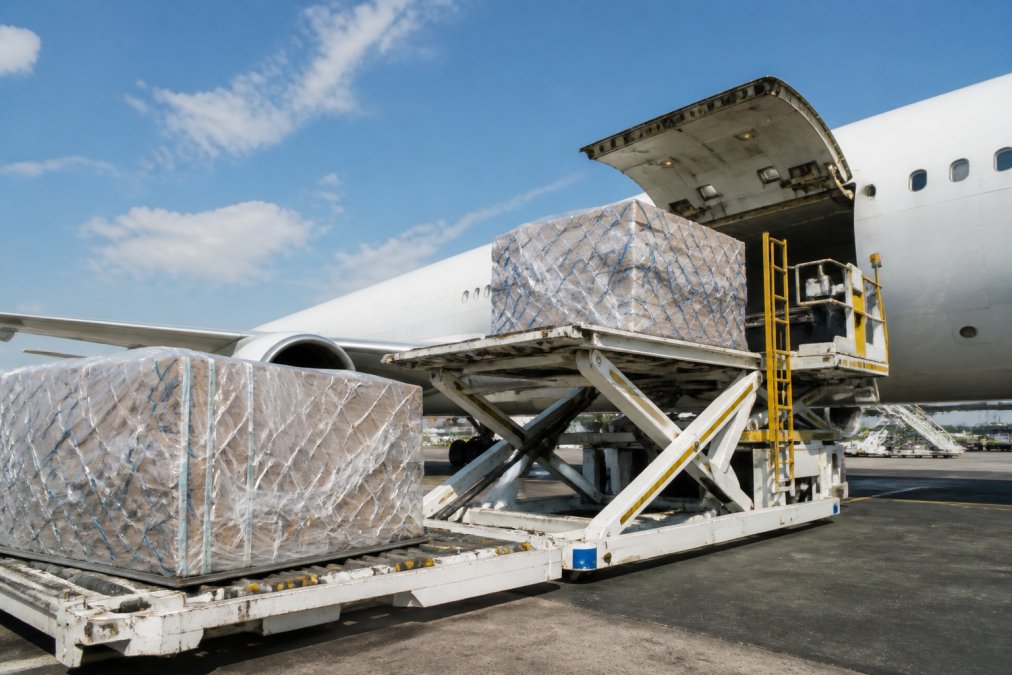
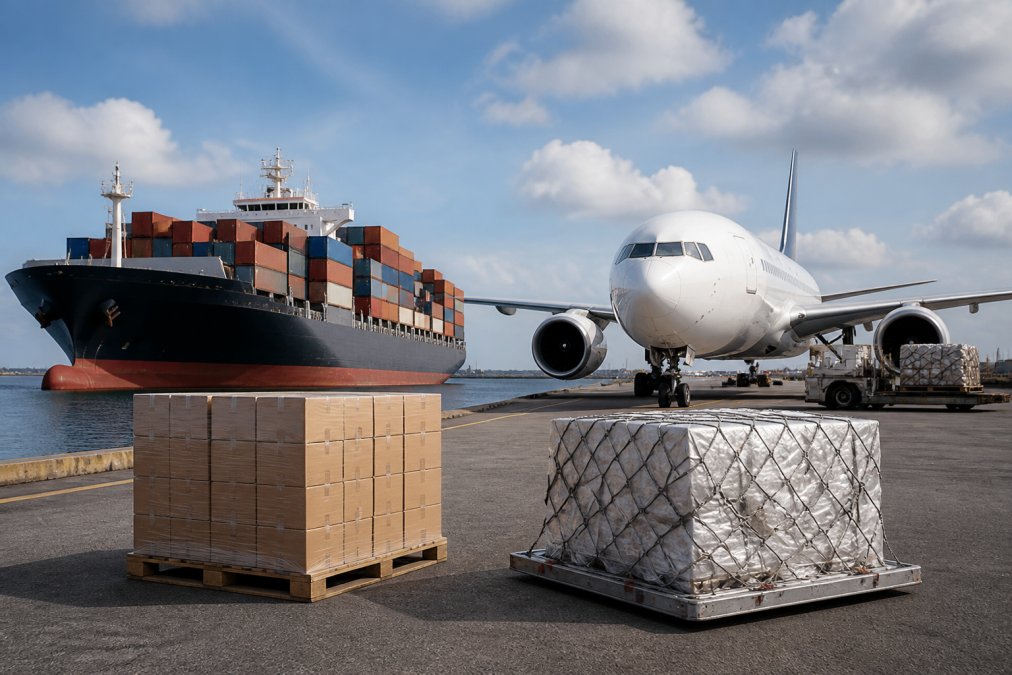
 comparison
International Shipping vs Air Freight: 2026 Guide
Table of Contents
- International Shipping vs Air Freight: Key Differences
- Air Freight vs Ocean Freight Cost Comparison
- International Shipping Transit Times Explained
- Cargo Capacity, Weight Limits, and How to Calculate CBM for Shipping Containers
- Reliability, Security, and Risk Management
- Environmental Impact and Carbon Footprint
- When to Choose Air Freight vs Ocean Freight: A Decision Framework
- Conclusion
Last Updated: August 26, 2026
International Shipping vs Air Freight: Key Differences
The choice between international shipping and air freight determines how fast your cargo arrives, how much you'll spend, and whether your supply chain stays competitive. International shipping (ocean freight) handles approximately 90% of global trade by volume, making it the backbone of international commerce (mordorintelligence.com). Ocean freight is slow but cheap. Air freight is fast but expensive, sometimes 8 to 16 times more costly per kilogram than ocean freight.
The real decision comes down to three factors: your deadline, your cargo value, and your total landed cost. Air freight delivers in 3-7 days. Ocean freight takes 20-45 days door-to-door, including customs and drayage. That speed premium costs money. But for high-value cargo like semiconductors, pharmaceuticals, and electronics, the faster cash cycle often justifies the premium. For bulk commodities and seasonal goods, ocean freight's lower cost makes it the only viable option.
Air Freight vs Ocean Freight Cost Comparison
Ocean freight costs $0.03-$0.15 per kilogram, while air freight ranges from $2.50-$8.50 per kilogram depending on service level. Ground transport sits in the middle at $0.12-$0.45 per kilogram. For a 1,000-kilogram shipment, ocean freight costs $30-$150, air freight $2,500-$8,500, and ground transport $120-$450.
Most shippers make a critical mistake: they compare freight rates in isolation. The real metric is total landed cost, the sum of freight, customs duties, insurance, drayage, and financing costs. For high-value cargo like electronics worth $100 per kilogram, air freight costs only 2.5-8.5% of the cargo value. Faster delivery means inventory turns faster, cash converts sooner, and you avoid markdown losses from delayed seasonal goods. Ocean freight's cost advantage disappears when you account for holding inventory for 20-45 days. A manufacturer waiting for components loses production time. A retailer waiting for seasonal inventory misses peak selling windows.
Sea-air hybrid shipping offers a middle ground, costing about 40% less than full air freight and cutting 15-20 days off ocean transit by routing through major hubs like Dubai or Singapore. Global air cargo rates increased 33.4% year-over-year in Q2 2026, making ocean freight's stable pricing attractive for budget-sensitive operations (xeneta.com). However, cargo worth over $50 per kilogram should fly, the cost as a percentage of cargo value remains reasonable even at elevated rates.
International Shipping Transit Times Explained
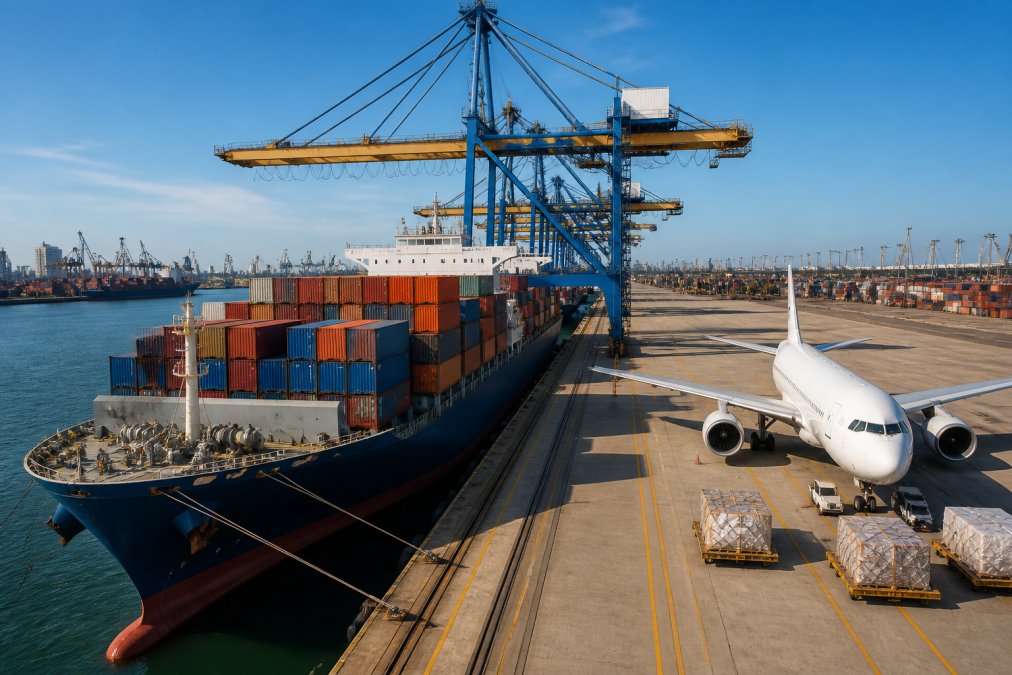
Ocean freight typically takes 20-45 days door-to-door, including port operations, customs clearance, and inland drayage. The variability matters more than the average, weather delays, port congestion, and customs backlogs can extend transit time unpredictably. Air freight delivers in 3-7 days, and this speed is its entire value proposition. If your deadline is under 10 days, air freight is your only realistic option.
The transit time difference creates a strategic inflection point: deadlines under 10 days require air, 10-20 days might allow sea-air hybrid, and over 20 days favor pure ocean freight. Ocean freight variability forces shippers to hold safety stock, which ties up capital. Air freight's predictability reduces the inventory buffer you need to maintain.
The pharmaceutical industry demonstrates this perfectly, life-saving drugs move by air freight to ensure timely access in urgent medical scenarios. E-commerce demand for air freight has shifted, declining 7% year-over-year in May 2026, marking its sixth consecutive month of contraction. This suggests retailers are shifting to longer planning horizons and ocean freight.
Cargo Capacity, Weight Limits, and How to Calculate CBM for Shipping Containers
Understanding how to calculate CBM (cubic meters) is essential for choosing the right equipment and mode. The formula is: length (meters) × width (meters) × height (meters) = CBM.
A standard 20-foot container has internal dimensions of 5.87m × 2.35m × 2.38m, totaling approximately 33 cubic meters with a 28 metric ton weight limit. A 40-foot container measures 12.03m × 2.35m × 2.38m, totaling approximately 67 cubic meters with the same 28 metric ton weight limit. Containers have both volume and weight limits, your cargo hits whichever comes first.
For air freight, dimensional weight matters: (length × width × height in centimeters) ÷ 5000. Bulky but light packages get charged as if heavier because they consume valuable cargo space. Ocean freight uses a different calculation, LCL (Less than Container Load) shipments are billed based on whichever generates higher revenue: actual weight or CBM.
For LCL shipments, consolidation changes the economics. Grouping multiple small shipments into one container can reduce per-unit cost by 30-50% because you split the fixed container cost across more cargo.
:::pro-tip For LCL shipments, consolidation changes the economics. Grouping multiple small shipments into one container can reduce per-unit cost by 30-50% because you split the fixed container cost across more cargo. Always ask your freight forwarder about consolidation schedules before choosing LCL. :::
Reliability, Security, and Risk Management
Air cargo undergoes more rigorous security checks than sea-bound freight, and insurance rates for air freight are typically lower, 0.30-0.50% of CIF value compared to ocean freight at 0.40-0.80%. This difference reflects real risk: ocean freight exposes cargo to water damage, rough handling, and theft, while air freight's controlled environment and security protocols reduce these risks.
Reliability in ocean freight depends heavily on carrier selection and route. Major carriers operate scheduled services with published schedules. Delays cascade through supply chains, a late component shipment can halt production lines worth thousands per hour. Air freight's reliability is superior but not perfect. Weather still affects operations, but the frequency of disruption is lower and recovery time faster. This matters for just-in-time manufacturing, where the automotive industry uses air freight to deliver critical components.
Port congestion remains a major risk for ocean freight. When ports back up, vessels wait at anchor, extending transit times unpredictably. Customs clearance adds another layer of uncertainty, complex documentation or tariff classification errors can delay clearance for days. Air freight's faster transit means less time sitting in customs, reducing documentation-related delay risks.
Environmental Impact and Carbon Footprint
Air freight emits approximately 25-50 times more CO2 per ton-kilometer than ocean freight (peer-reviewed research). Ocean shipping is over 7 times more carbon-efficient than air transport. For businesses with sustainability commitments, this matters significantly. A 1,000-kilogram shipment by air from Asia to North America generates roughly 5-10 metric tons of CO2 equivalent, while the same shipment by ocean generates 0.1-0.2 metric tons.
The maritime sector is adopting cleaner fuels and technologies to reduce emissions. Many carriers now offer "green" shipping options using biofuels or slow-steaming at 5-15% premium. Air freight has fewer decarbonization options, sustainable aviation fuels remain expensive and limited in availability. For e-commerce and consumer brands, this creates a strategic decision: speed versus sustainability. Many are shifting toward hybrid approaches, using ocean freight for planned inventory and air freight only for emergency restocks.
When to Choose Air Freight vs Ocean Freight: A Decision Framework
Choose air freight if:
- Your deadline is under 10 days
- Your cargo value exceeds $50 per kilogram
- Your cargo is high-risk (pharmaceuticals, electronics, hazardous materials)
- You're managing just-in-time supply chains where delays halt production
- Your working capital cost exceeds the air freight premium
Choose ocean freight if:
- Your deadline is over 20 days
- Your cargo is bulk commodities or low-value goods
- You're managing seasonal inventory with predictable demand
- Your carbon footprint matters to your brand or customers
- Your cargo is stable and doesn't require climate control
Choose sea-air hybrid if:
- Your deadline is 10-20 days
- You need speed but can't justify full air freight costs
- You're routing through major consolidation hubs
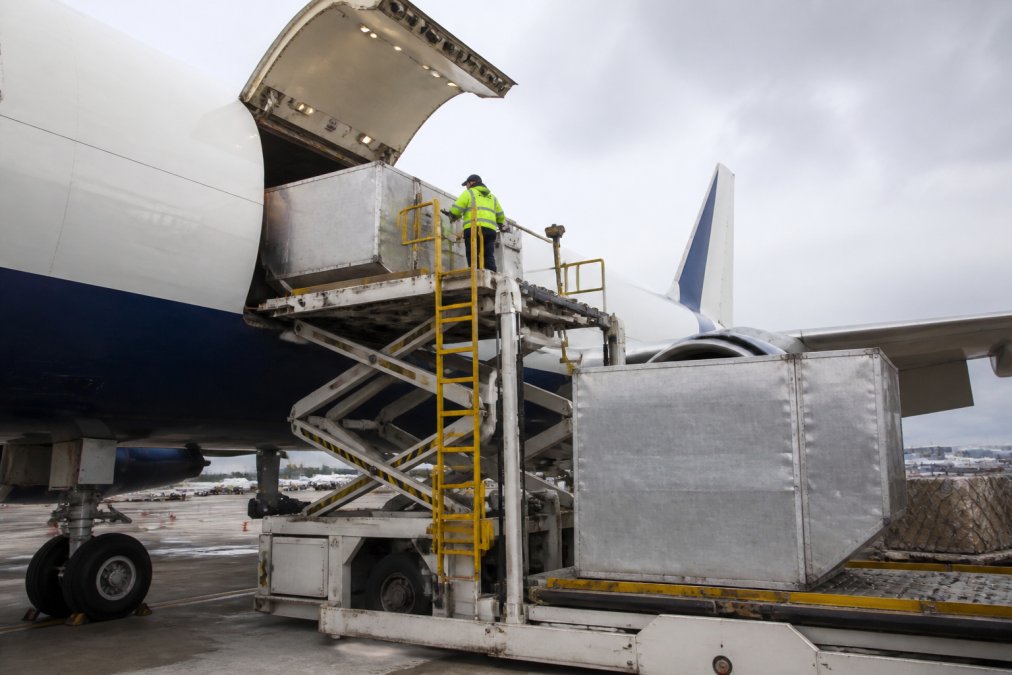
Shipments related to semiconductors and data centers have been the main driver of volume on most transpacific air cargo lanes in Q2 2026, reflecting the economics: semiconductor value is so high that speed justifies cost. Many companies are shifting some shipments from air freight to sea freight to reduce logistics costs, as transportation mode selection significantly affects logistics efficiency and cost management.
The real decision framework comes down to total landed cost. Calculate the freight cost, add the inventory holding cost for the transit period, subtract any markdown losses from delayed delivery, and factor in your cost of capital. Whichever mode produces the lowest total wins.
Conclusion
International shipping and air freight solve different problems. Ocean freight moves 90% of global trade because it's cheap and reliable for bulk cargo. Air freight captures high-value, time-sensitive shipments where speed justifies cost. The choice depends on your cargo value, deadline, and total landed cost, not just the freight rate.
The market is shifting. Air cargo rates increased 33.4% year-over-year in Q2 2026, pushing more businesses toward ocean freight and hybrid strategies. Sustainability concerns are accelerating the shift. But for pharmaceuticals, semiconductors, and emergency restocks, air freight remains essential.
Get started with Freight-Calculator.com's instant rate comparison tool and see your options side-by-side. Input your shipment details, calculate CBM for your cargo, and compare ocean, air, and hybrid costs in under 30 seconds, no registration required. The platform's transparent pricing and direct freight forwarding service eliminate the guesswork and surprise fees that plague traditional freight quotes.
| Mode | Cost per kg | Transit Time | Best For | Carbon Impact |
|---|---|---|---|---|
| Ocean Freight | $0.03-$0.15 | 20-45 days | Bulk cargo, low-value goods | Low |
| Air Freight | $2.50-$8.50 | 3-7 days | High-value, time-sensitive | Very High |
| Sea-Air Hybrid | $1.50-$5.00 | 10-20 days | Moderate speed, cost control | Moderate |
| Ground Transport | $0.12-$0.45 | 5-15 days | Regional, short-haul | Moderate |
Frequently Asked Questions
What's the main difference between international shipping and air freight?
International shipping typically refers to ocean freight, which moves cargo by sea and handles about 90% of global trade by volume. Air freight moves cargo by plane and is 4 to 8 times faster but costs 8 to 16 times more per kilogram. Ocean freight is ideal for large volumes and cost-sensitive shipments, while air freight suits time-sensitive, high-value cargo. Your choice depends on your deadline, budget, and cargo type.
How do I decide if my cargo should go by air or ocean?
Use this framework: If your deadline is under 10 days, air freight is necessary because ocean routes require 15-20 days door-to-door including customs and drayage. If your cargo is worth over $50/kg, air freight costs only 2-5% of cargo value, justifying the premium. For bulk shipments under $50/kg with deadlines beyond 10 days, ocean freight saves significantly. Sea-air hybrid shipping offers a 40% cost reduction versus full air freight and cuts 15-20 days off ocean transit through hubs like Dubai or Singapore.
How do I calculate CBM for shipping containers to estimate costs?
CBM (cubic meters) measures cargo volume. Multiply length × width × height in meters to get CBM. For example, a box 1m × 1m × 1m = 1 CBM. Ocean freight pricing uses CBM or weight, whichever is greater. Air freight uses dimensional weight: divide CBM by 166.5 (or multiply by 6,000) to convert to kilograms for pricing. Accurate CBM calculation prevents overcharges and helps you compare ocean vs air costs fairly. Tools like Freight-Calculator.com's integrated CBM calculator automate this.
What hidden costs should I expect beyond the quoted shipping rate?
Landed cost includes freight charges plus customs clearance, drayage (ground transport), port fees, fuel surcharges, and documentation fees. Air freight typically has lower insurance costs (0.30-0.50% of CIF value) than ocean freight (0.40-0.80%), but undergoes stricter security checks. Ocean freight faces port congestion delays and weather-related risks. Request itemized quotes that break down inland fees, pre-pull charges, and warehouse delivery costs. Transparent freight forwarders like Freight-Calculator.com show all cost components upfront to avoid surprises.
Is air freight more secure than ocean shipping?
Air cargo undergoes more rigorous security checks than sea-bound freight, making theft and tampering less likely. Insurance rates for air freight are typically lower (0.30-0.50% of CIF value) than ocean freight (0.40-0.80%), reflecting reduced risk. However, ocean freight faces additional risks from water damage, rough handling at ports, and piracy in certain routes. Air freight's higher security comes at a cost premium. For high-value or sensitive cargo, air freight's security advantage often justifies the expense.
This article was written using GrandRanker