 how-to
Air Freight Forwarder: What You Need to Know
Table of Contents
- What Is an Air Freight Forwarder and How Does It Work
- Air Freight Shipping Rates: What Drives Costs in 2026
- Air Freight Transit Times: Speed and Reliability
- How to Choose an Air Freight Forwarder
- Expedited Ground Transportation and Airport-to-Airport Logistics
- Technology and Supply Chain Optimization in Air Freight
- Frequently Asked Questions
Last Updated: September 17, 2026
What Is an Air Freight Forwarder and How Does It Work
An air freight forwarder is a licensed logistics provider that arranges and coordinates cargo shipment via aircraft. Forwarders act as intermediaries between shippers and airlines, handling documentation, customs clearance, and final delivery. They consolidate shipments from multiple customers to fill aircraft capacity, reducing costs and improving efficiency.
The air freight forwarding market is valued at approximately USD 99.68 billion in 2026, according to Mordor Intelligence's air freight market analysis. This reflects the critical role forwarders play in global supply chains.
The Operational Workflow: How a Shipment Moves Through a Forwarder
Here's how a typical air freight shipment flows:
1. Booking and Rate Quote You contact a forwarder with shipment details: origin, destination, weight, dimensions, commodity type, and delivery date. The forwarder calculates the rate based on airline capacity, fuel surcharges, and consolidation availability. You review the all-in cost and confirm the booking.
2. Pickup and Documentation The forwarder arranges pickup and prepares the air waybill (AWB), the master document that travels with your cargo, including shipper/consignee details, commodity descriptions, weight, dimensions, special handling codes, and insurance declarations. For international shipments, they prepare export documentation and submit electronic advance information to customs authorities.
3. Consolidation at Origin Hub Your shipment arrives at the forwarder's origin airport facility. Full-load shipments move directly to the airline dock; partial loads enter the consolidation warehouse where they wait alongside other shipments destined for the same region. The forwarder batches multiple shipments into a single "master air waybill" (MAWB) to fill aircraft capacity. This consolidation phase typically takes 1-3 days but can extend during peak seasons.
4. Flight Movement Once a full load is ready, the forwarder books space with an airline (or uses pre-negotiated capacity agreements). The consolidated shipment is loaded onto the aircraft. Flight time depends on distance: domestic routes average 1-3 hours; transpacific routes average 12-16 hours; transatlantic routes average 7-10 hours. The forwarder tracks the flight in real time and notifies you of departure and estimated arrival.
5. Destination Clearance and Deconsolidation Upon arrival at the destination airport, the shipment enters customs processing. The forwarder submits all import documentation to the destination country's customs authority. Customs clearance typically takes 2-4 hours for routine shipments but can extend to 24+ hours if flagged for inspection or if documentation is incomplete. Once cleared, the forwarder deconsolidates the master shipment and prepares it for final delivery.
6. Final Delivery The forwarder arranges ground transportation from the destination airport to your facility via its own fleet, a contracted carrier, or a local drayage company. Delivery typically occurs within 1-2 business days of customs clearance. You receive proof of delivery (POD) and a final invoice.
Key Differences: Forwarders vs. Airlines vs. Freight Brokers
- Airlines move cargo but don't arrange pickup, documentation, or delivery.
- Forwarders own or control consolidation capacity, negotiate directly with airlines, and handle the full logistics chain. They are licensed and bonded.
- Freight brokers arrange shipments but don't own capacity or consolidation facilities. They rely on forwarders and carriers to execute the move.
Air Freight Shipping Rates: What Drives Costs in 2026
Air freight pricing is volatile and driven by multiple factors beyond distance. Understanding rate drivers helps you plan budgets and time shipments strategically.
Global air cargo spot rates rose 41% year-over-year in May 2026, reaching an average of USD 3.40 per kilogram, according to Supply Chain Dive's air cargo analysis. This spike reflects capacity constraints and seasonal demand spikes. In the second quarter of 2026, rates climbed an average of 33.4% year-over-year, with April at 30.5%, May at 37.5%, and June at 32.2%, per UPS quarterly freight and logistics trends report.
What Actually Drives Rate Swings
- Fuel costs: Jet fuel prices directly impact airline operating costs. A USD 10 per barrel swing in crude oil can shift air freight rates 3-5%.
- Capacity use: When capacity tightens (peak seasons, aircraft retirements, geopolitical disruptions), rates spike 20-40%.
- Seasonal demand: Peak holiday shipping (October-December) and Lunar New Year create bottlenecks that push rates up 20-40%. Summer months typically see lower rates.
- Route demand imbalance: High-traffic routes have stable rates; reverse routes cost more due to empty belly capacity returning.
- Weight and density: Heavier, denser cargo pays lower per-kilogram rates. Light, bulky cargo pays a premium. Steel parts may cost USD 2.50/kg; foam insulation may cost USD 5.00/kg.
- Fuel surcharges: Most forwarders add a fuel surcharge (typically 5-15% of base freight) that adjusts weekly based on jet fuel prices.
Cost-Benefit Analysis: Air Freight vs. Alternatives
The decision to use air freight should be based on a clear cost-benefit trade-off. Here's how air freight compares to other modes:
Air Freight vs. Ocean Freight
Ocean freight remains significantly cheaper per unit but takes weeks; air freight costs more but delivers in days.
Air makes sense when the value of speed exceeds the cost premium: perishables that spoil in transit, fashion items with short selling windows, emergency replacements preventing production loss, and high-value, low-volume items. Ocean makes sense when you can plan 4-6 weeks ahead and ship full containers.
Air Freight vs. Ground/LTL (Less Than Truckload)
Ground wins on cost for domestic shipments under 1,000 miles where 2-3 day delivery is acceptable. Air wins when you need next-day or 2-day delivery, or when the shipment exceeds 10,000 lbs and you want to avoid full truckload rates.
Air Freight vs. Scheduled Airport-to-Airport Ground ("Airline on Wheels")
Some forwarders operate scheduled ground routes between major airport hubs (e.g., Los Angeles to Dallas to Atlanta). These routes move faster than standard LTL. Transit time is typically 1-2 days for regional moves.
This hybrid model works best for:
- Regional shipments (within 1,000 miles) where ground distance is manageable
- Time-sensitive moves that don't justify full air freight cost
- Shipments too large for LTL but not large enough to justify full truckload
Example: A 8,000 lb shipment from Los Angeles to Phoenix via scheduled ground (next-day delivery) versus via air freight. The ground option still delivers next day.
The Real Cost of Air Freight: Beyond the Base Rate
The base freight rate is only part of the total cost. You'll also pay handling fees, documentation and customs clearance, ground pickup and delivery, fuel surcharges, insurance, and hazmat fees. Transparent forwarders break down these components so you see exactly what you're paying for.
Air Freight Transit Times: Speed and Reliability
Speed is the primary reason shippers choose air freight. Most shipments move through consolidation hubs where they wait for a full load to depart, adding 2-5 days to total transit time.
Realistic timeline for most air shipments:
- Origin pickup: 1 day
- Consolidation at hub: 1-3 days
- Flight time: 1-3 days
- Destination clearance and delivery: 1-2 days
Total: 4-9 days from pickup to final delivery. If you need 2-day delivery, you'll pay a premium for expedited handling. If you can wait 7-10 days, consolidation can offer cost savings versus express rates.
How to Choose an Air Freight Forwarder
Selecting the right forwarder matters because they control visibility, pricing transparency, and service reliability.
Licensing and credentials: Verify the forwarder holds a license from the appropriate authority. In the United States, look for TSA-approved Indirect Air Carrier status and NVOCC (Non-Vessel Operating Common Carrier) licensing. Freight-Calculator.com operates as a licensed and bonded NVOCC and TSA-approved forwarder, meeting strict regulatory standards for handling sensitive shipments.
| Evaluation Criteria | What to Look For | Red Flag |
|---|---|---|
| Licensing | TSA approval, NVOCC bonding | No verifiable credentials |
| Pricing | Itemized quote with all fees | Vague pricing or hidden charges |
| Technology | Real-time tracking, rate quotes | Manual quotes, no visibility |
| Network | Direct airline relationships | Reliance on other forwarders |
| Service | Quick response to questions | Slow turnaround times |
Expedited Ground Transportation and Airport-to-Airport Logistics
Ground transportation between airports is critical to total transit time and cost. Traditional air freight moves cargo from origin airport to consolidation hub, waits for a full load, flies to destination airport, then ground transports to final delivery. The alternative is scheduled airport-to-airport ground transportation on dedicated routes.
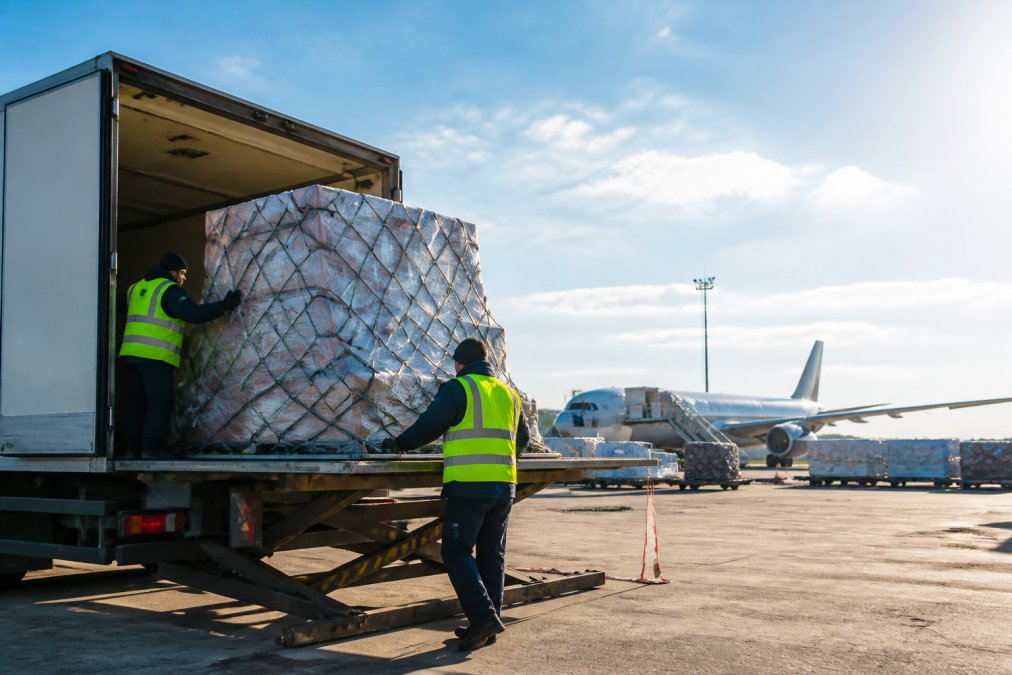
The benefits of airport-to-airport logistics:
- Predictable transit: Scheduled routes mean your cargo moves on a fixed timeline, not waiting for consolidation
- Lower cost than air: Ground transport costs 30-50% less than actual airfreight but moves faster than ocean
- Reduced handling: Fewer transfers mean less damage risk and faster processing
- Intermodal flexibility: Combine ground legs with short-haul flights for optimal cost-speed balance
Technology and Supply Chain Optimization in Air Freight
Modern forwarders use technology to compress timelines and reduce costs through digitalization and e-Freight systems that automate documentation. Real-time rate calculation platforms let you compare routes, consolidation options, and speed tiers before committing. E-Freight systems digitize customs documentation, reducing manual processing and clearance delays. Freight-Calculator.com combines instant rate quoting with comprehensive shipment coordination, showing landed costs upfront with no registration required.
Frequently Asked Questions
What is the primary role of an air freight forwarder?
An air freight forwarder arranges and coordinates the shipment of cargo via air, handling documentation, customs clearance, and logistics coordination between shippers and airlines. They consolidate smaller shipments into full containers for cost efficiency and manage the entire supply chain from pickup to final delivery. Licensed and bonded forwarders like those TSA-approved ensure compliance with regulations and provide accountability throughout transit.
How do air freight shipping rates compare to ocean freight in 2026?
Air freight rates averaged $3.40 per kilogram in May 2026, up 41% year-over-year, while rates increased an average of 33.4% in Q2 2026. Ocean freight remains significantly cheaper per unit but takes weeks; air freight costs more but delivers in days. The choice depends on your cargo value, urgency, and volume. Freight-Calculator.com provides instant rate comparisons for both options without registration, letting you evaluate landed costs in under 30 seconds.
What factors affect air freight transit times?
Transit times depend on origin and destination airports, cargo handling procedures, customs processing, and current capacity. Direct flights are faster than routed shipments. Peak seasons (Lunar New Year, holiday periods) create delays even with air freight. Ground transportation to and from airports adds 1-3 days. Expedited air freight forwarders using scheduled airport-to-airport routes can reduce variability and improve predictability for time-sensitive shipments.
How do I know if an air freight forwarder is legitimate and trustworthy?
Verify that the forwarder is licensed and bonded as an NVOCC or freight forwarder with the Federal Maritime Commission or relevant regulatory body. Check for TSA approval if handling domestic air freight. Ask about their track record, customer references, and transparency on pricing. Avoid platforms that require registration before showing rates or that lack clear fee breakdowns. Reputable forwarders provide real-time pricing, detailed documentation, and accountability from quote through delivery.